

Our partner for world banknotes research

| Briggs & Bustos > Auction 18 | Auction date: 4 September 2026 |
| Lot number: 404 Price realized: 5,000 MXN (Approx. 296 USD / 255 EUR) Note: Prices do not include buyer's fees. | |
| Lot description: Grove UNCAT, F&F-407 VAR, Olvera UNL – Cruz de los Defensores de la República, 1922-1936. AU.- Elaborada en bronce dorado, 60.6 x 50.7 milímetros (sin suspensión), 59.26 gramos totales, placa base de ocho puntas diamantadas. Sobre ésta una Cruz Maltesa con esmalte rojo, terminada en volutas, fileteada al oro. En la parte central un botón con guirnalda en la parte exterior, exergo esmaltado en azul con la inscripción GENERAL DE DIV. IGNACIO COMONFORT. Al centro esmalte tricolor y un águila mexicana. Reverso con exergo en esmalte azul la inscripción CUERPO DE DEFENSORES DE LA REPUBLICA y en blanco SERVICIOS DISTINGUIDOS DESDE 1836, esmalte tricolor al centro y águila mexicana de menor tamaño. Es de mencionar que los colores del exergo en el reverso están intercambiados respecto al ejemplar catalogado por Frid & Frid. Suspensión de guirnalda con esmaltes verdes, asa y presilla con cinta de dos franjas guinda y una franja blanca al centro. Se incluye otorgamiento al General Brigadier Guillermo C. Procel Ruiz, fechado el 3 de Agosto de 1944. Presenta mínimo contacto en bordes y puntos altos. En cuanto al documento, bien conservado, con mínimas arrugas ENGLISH: Grove UNCAT, F&F-407 VAR, Olvera UNL – Cross of the Defenders of the Republic, 1922-1936. AU. Crafted in gilt bronze, 60.6 x 50.7 millimeters (excluding suspension), 59.26 grams in total weight, with an eight-pointed diamond-cut base plate. Over this, a Maltese Cross with red enamel, terminating in volutes and edged in gold. At center, a button with an outer wreath, blue enamel exergue bearing the inscription GENERAL DE DIV. IGNACIO COMONFORT. At center, tricolor enamel and a Mexican eagle. The reverse features a blue enamel exergue bearing the inscription CUERPO DE DEFENSORES DE LA REPUBLICA and, in white, SERVICIOS DISTINGUIDOS DESDE 1836, with tricolor enamel at center and a smaller Mexican eagle. It should be noted that the colors of the reverse exergue are interchanged in comparison with the example cataloged by Frid & Frid. Wreath suspension with green enamels, loop and clasp with ribbon featuring two maroon stripes and one white stripe at center. Includes award document granted to Brigadier General Guillermo C. Procel Ruiz, dated August 3, 1944. Presents minimal contact on the edges and high points. The document is well preserved, with minimal wrinkles. Estimate: 6800 - 7500 MXN | 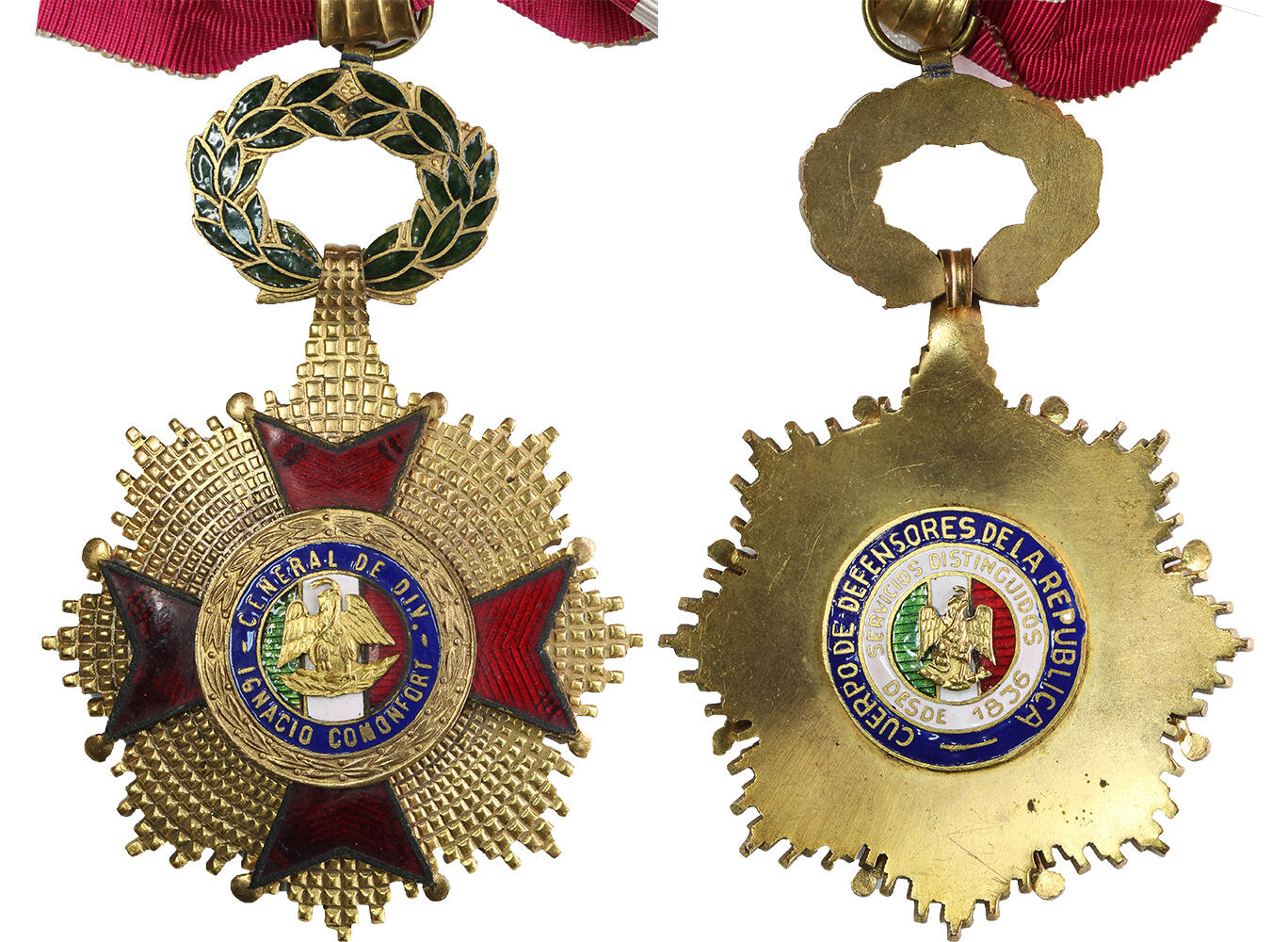 |
Match 1:
| Briggs & Bustos > Auction 18 | Auction date: 4 September 2026 |
| Lot number: 414 Price realized: 1,600 MXN (Approx. 95 USD / 82 EUR) Note: Prices do not include buyer's fees. | |
| Lot description: Grove UNCAT, F&F UNCAT, Olvera UNL – Palmas académicas de la Sociedad de Geografía y Estadística (Sin fechar). UNC.- Distintivo formado por una rama de encino y otra de palma. En la parte superior presenta un asa sujeta a un águila mexicana, la cual cuenta con una reasa en la parte posterior para su sujeción a una cinta color naranja, provista de un gafete y prendedor. Elaborado en plata 0.925, quintada en la parte posterior. Dimensión de 35 x 87 milímetros, peso de 13.26 gramos totales ENGLISH: Grove UNCAT, F&F UNCAT, Olvera UNL – Academic Palms of the Society of Geography and Statistics (Undated). UNC. Insignia formed by an oak branch and a palm branch. At the top, it features a loop attached to a Mexican eagle, which has a suspension ring on the reverse for attachment to an orange ribbon, fitted with a clasp and pin. Crafted in .925 fine silver, hallmarked on the reverse. Measuring 35 x 87 millimeters, 13.26 grams in total weight. Estimate: 1100 - 1200 MXN | 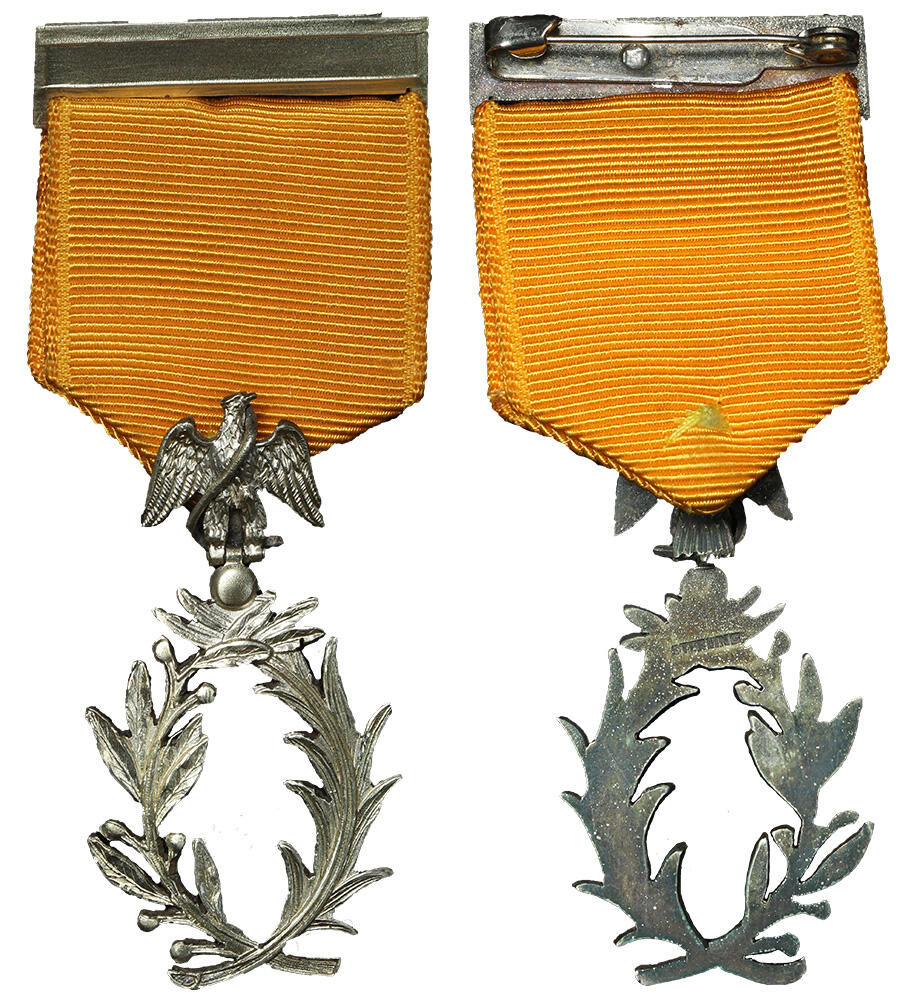 |
Match 2:
| Briggs & Bustos > Auction 18 | Auction date: 4 September 2026 |
| Lot number: 407 Price realized: 3,800 MXN (Approx. 225 USD / 194 EUR) Note: Prices do not include buyer's fees. | |
| Lot description: Grove UNCAT, F&F UNCAT, Olvera UNL – Cruz de Guerra, Tercera Clase. AU.- Latón con esmaltes, 81 x 80 milímetros de diámetro, 69.73 gramos de peso, placa base de diez puntas; cinco lisas y cinco con perlé de cuentas. Sobre ésta una Cruz Maltesa con esmalte rojo y entre sus brazos guirnaldas esmaltadas de color verde. En la parte central un botón con la inscripción CRUZ DE GUERRA TERCERA CLASE en letras esmaltadas de rojo. Al centro esmalte rojo con la efigie de Cuauhtémoc a la izquierda según Frank W. Grove y que desde nuestra óptica también pudiera ser un Guerrero Águila. En el reverso, un botón con la inscripción CREADA POR DECRETO DE 1° DE NOV DE 1943. Conserva reasa, sin cinta. No localizamos más información respecto a dicho decreto. No obstante, cabe mencionar que el diseño del botón central es análogo al de las condecoraciones de Cruz de Guerra emitidas posteriormente por decreto del 29 de Julio de 1949 (Grove D-564, 565 y 566), otorgada al personal militar en tiempo de guerra o conflicto armado por acciones que no justifican la concesión de la Medalla al Valor. La primera de la que tenemos conocimiento ENGLISH: Grove UNCAT, F&F UNCAT, Olvera UNL – War Cross, Third Class. AU. Brass with enamels, 81 x 80 millimeters in diameter, 69.73 grams in weight, with a ten-pointed base plate; five plain and five with beaded edges. Over this, a Maltese Cross with red enamel and green enameled wreaths between the arms. At center, a button bearing the inscription CRUZ DE GUERRA TERCERA CLASE in red enameled letters. At center, red enamel with the effigy of Cuauhtémoc facing left according to Frank W. Grove, although from our perspective it could also represent an Eagle Warrior. On the reverse, a button bearing the inscription CREADA POR DECRETO DE 1° DE NOV DE 1943. Retains suspension loop, without ribbon. We were unable to locate further information regarding this decree. Nevertheless, it should be noted that the central button design is analogous to that of the War Cross decorations issued later by decree of July 29, 1949 (Grove D-564, 565, and 566), awarded to military personnel during wartime or armed conflict for actions that did not justify the granting of the Medal of Valor. The first example known to us. Estimate: 4100 - 4500 MXN | 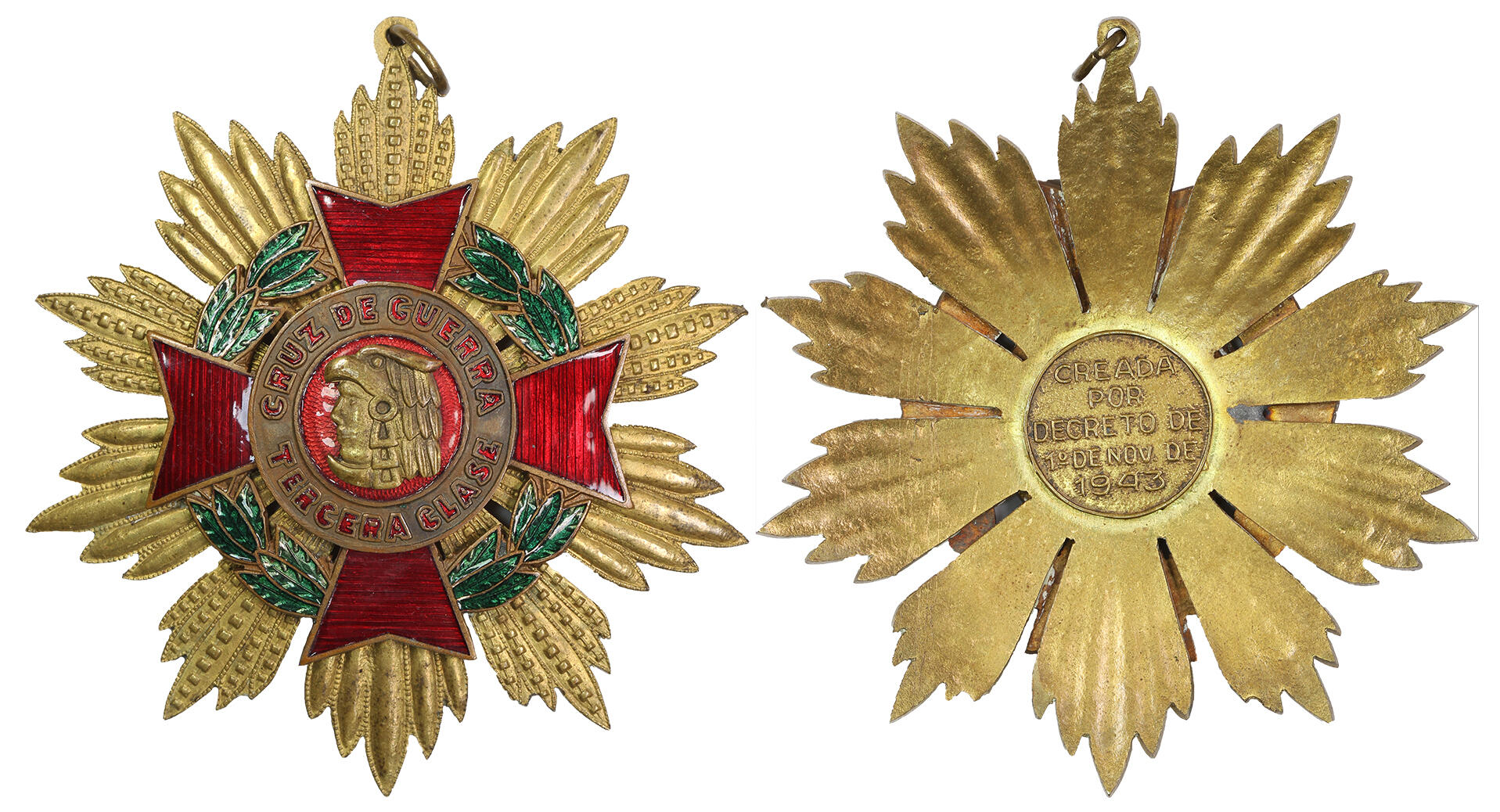 |
Match 3:
| Briggs & Bustos > Auction 18 | Auction date: 4 September 2026 |
| Lot number: 67 Price realized: 190,000 MXN (Approx. 11,259 USD / 9,693 EUR) Note: Prices do not include buyer's fees. | |
| Lot description: Grove O-26, F&F-306 VAR, Olvera p. 287-288 - Cruz de la Imperial Orden de Guadalupe, al Mérito Civil y Virtudes, 1864-1867. Oro AU.- Tercera época. Reinstaurada durante el Segundo Imperio de Maximiliano y reformada el 10 de Abril de 1865. Cruz de Caballero, otorgada por las ciencias, el arte, la diplomacia y por la buena voluntad mostrada por los seguidores del Imperio. Los nombramientos se efectuaban 12 de Diciembre de cada año, fiesta de Nuestra Señora de Guadalupe, y/o el 06 de Julio de cada año, cumpleaños del Emperador, además de aquellos otorgados por circunstancias especiales. Diseño consistente en una cruz Leopoldo de cuatro brazos con perlé y terminados en volutas. Entre los brazos resplandores en forma de rayos largos, cortos y lisos, con una corona de palmas y hojas sujeta a la parte posterior de la cruz. Los brazos, esmaltados por ambos lados con los tres colores de la bandera nacional, presentan al centro un medallón de elipse cuyo exergo, sobre esmalte verde, ostenta en letras de oro la inscripción: RELIGIÓN INDEPENDENCIA UNIÓN; al centro, sobre esmalte blanco y con resplandor en oro, se representa la imagen de la Virgen de Guadalupe. En el reverso, una elipse con exergo en esmalte verde, al centro ostenta sobre esmalte blanco, la inscripción en letras de oro: AL MÉRITO Y VIRTUDES. Soldada al brazo superior se encuentra una reasa sujeta a una nopalera, de la cual va soldada un águila mexicana coronada con serpiente y alas desplegadas en punta hacia arriba. Con una anilla esculpida de la serpiente que va sujeta a una anilla circular. Este ejemplar carece de cinta. Elaborada en oro con esmaltes por la firma Lemaître Fabricant d'Ordres (París, Francia), quienes fueron los principales fabricantes de insignias imperiales durante los primeros meses del Imperio de Maximiliano, antes de que los oficiales de cancillería encargaran a C. F. Rothe & Neffe la fabricación de las condecoraciones. Dimensión de 40 x 37 milímetros, 17.27 gramos de peso. Como característica distintiva de este fabricante, el exergo de la elipse del reverso es más delgado que el del anverso; asimismo, la tipografía presenta trazos más finos en comparación con la empleada por otros fabricantes. Los resplandores que rodean la imagen de la Virgen son sensiblemente más pequeños y, bajo el esmalte blanco del medallón central, se percibe un tenue patrón dorado. Destacado estado de conservación. Presenta una mancha oscura en la pata del águila que sostiene la serpiente y mínimas pérdidas de esmalte en el manto azul de la Virgen; por lo demás, el resto de los esmaltes permanece intacto. Una presentación y tamaño muy raro particularmente para esta orden civil ENGLISH: Grove O-26, F&F-306 VAR, Olvera p. 287-288 – Cross of the Imperial Order of Guadalupe, Civil Merit and Virtues, 1864-1867. Gold AU. Third period. Reinstated during the Second Empire of Maximilian and reformed on April 10, 1865. Knight's Cross, awarded for sciences, arts, diplomacy, and for the goodwill shown by supporters of the Empire. Appointments were made every December 12, the feast day of Our Lady of Guadalupe, and/or July 6, the Emperor's birthday, in addition to those granted under special circumstances. Design consisting of a four-armed Leopold cross with beading and terminating in volutes. Between the arms are rays in long, short, and plain forms, with a crown of palms and leaves attached to the reverse of the cross. The arms, enameled on both sides with the three colors of the national flag, feature at center an elliptical medallion whose exergue, on green enamel, bears the inscription in gold letters: RELIGIÓN INDEPENDENCIA UNIÓN; at center, on white enamel with golden rays, is the image of the Virgin of Guadalupe. The reverse features an ellipse with a green enamel exergue, bearing at center on white enamel the inscription in gold letters: AL MÉRITO Y VIRTUDES. Soldered to the upper arm is a suspension loop attached to a nopal cactus, from which a crowned Mexican eagle with serpent and upward-spread wings is soldered. With a sculpted serpent ring attached to a circular ring. This example lacks the ribbon. Crafted in gold with enamels by the firm Lemaître Fabricant d'Ordres (Paris, France), who were the principal manufacturers of imperial insignia during the first months of Maximilian's Empire, before chancery officials commissioned C. F. Rothe & Neffe to manufacture the decorations. Measuring 40 x 37 millimeters, 17.27 grams in weight. As a distinctive characteristic of this manufacturer, the reverse ellipse exergue is thinner than that of the obverse; likewise, the typography presents finer strokes compared with that used by other manufacturers. The rays surrounding the image of the Virgin are noticeably smaller and, beneath the white enamel of the central medallion, a subtle golden pattern is visible. Outstanding state of preservation. Presents a dark spot on the eagle's leg holding the serpent and minimal enamel losses on the Virgin's blue mantle; otherwise, the remaining enamels are intact. A very rare presentation and size, particularly for this civil order. Estimate: 108000 - 120000 MXN | 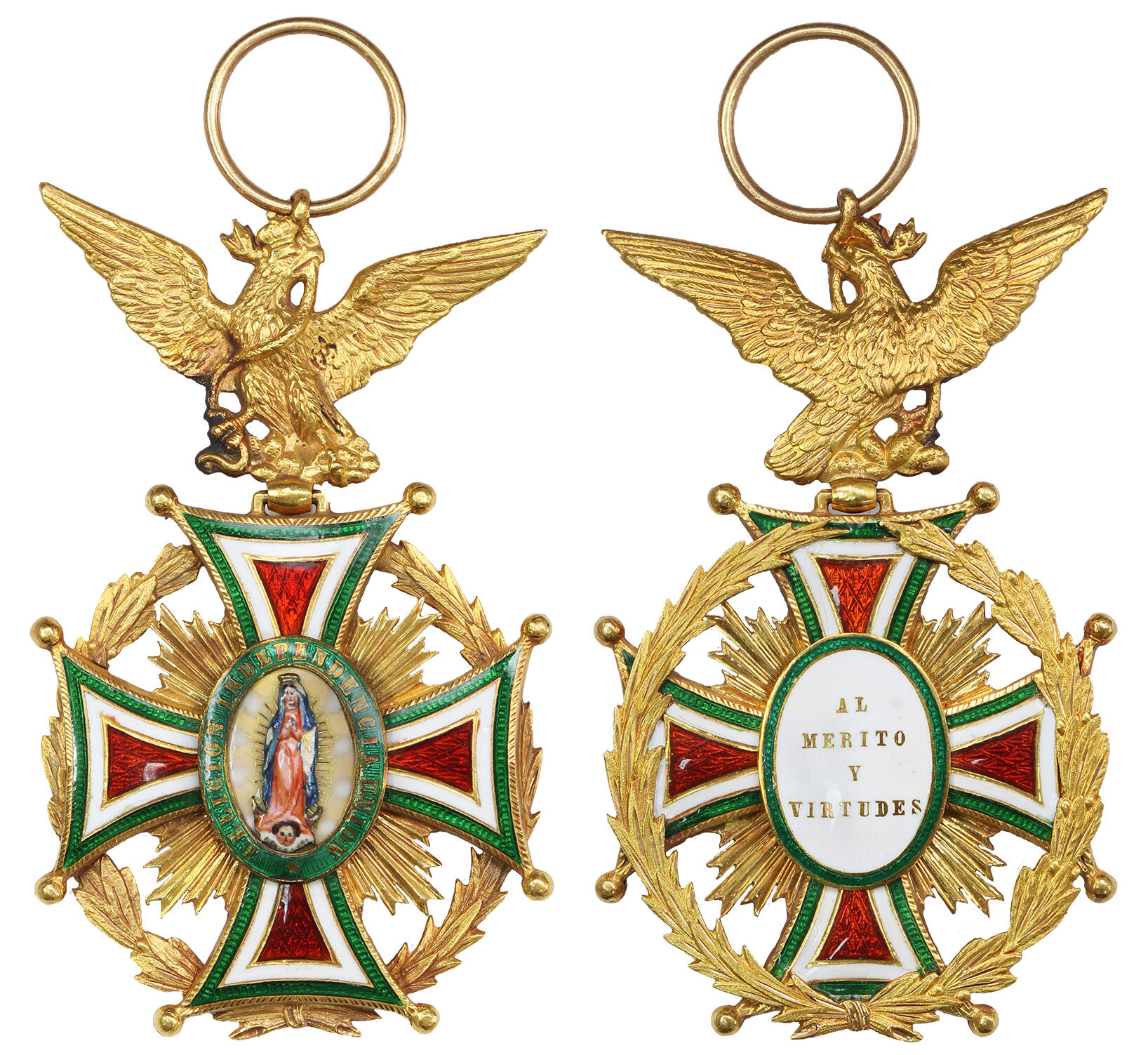 |
Match 4:
| Briggs & Bustos > Auction 18 | Auction date: 4 September 2026 |
| Lot number: 70 Price realized: 115,000 MXN (Approx. 6,815 USD / 5,867 EUR) Note: Prices do not include buyer's fees. | |
| Lot description: Grove UNCAT, F&F-UNCAT, Olvera UNCAT – Toluca Agradecida, 20 de Noviembre de 1884. NGC MS63. POP 1.- Larga y tortuosa pero necesaria fue la deuda contraída por la República Federal en 1824, y que abundando el tema particular con los ingleses, por más de 60 años se encontró en vigencia y que habrá de exponerse la renegociación y postura acontecida el 20 de noviembre de 1884, en la que Manuel Gonzalez a 40 días de concluir su mandato dado a presiones político financieras, presentó al Congreso un proyecto de consolidación y conversión de la deuda mexicana con Londres, proyecto que fue discutido del 12 al 20 de noviembre de 1884, y que en sentido amplio consistía en reconocer y convertir 17 millones de libras esterlinas o 100 millones de pesos plata, siendo altamente controvertido entre ciertas clases populares como obreros, artesanos, apoyados por estudiantes y cierta facción de la prensa, quienes llamaron a defender la soberanía nacional, generando un intenso debate con la oposición en las cámaras, trayendo consigo manifestaciones y movilizaciones en las calles de la capital así como de otras ciudades las cuales se tornaron violentas, generando la necesidad de la postergación del proyecto de ley del caso hasta que Porfirio Díaz llegara a la presidencia el 01 de diciembre de 1884. Si bien es cierto el proyecto en su más puro espíritu pretendía una reestructuración de deuda que permitiría al Gobierno Federal financiar el desarrollo económico nacional y que en ese sentir resultaba fundamental renegociar con los ingleses y cuyo efecto colateral sería la reinserción de México en el mercado internacional para la negociación de nueva deuda a largo plazo, la oposición consideraba que las bases del acuerdo eran injustas y de sospecha fraudulenta e indebida, afectando la honra de la nación, considerada como un valor supremo. En las calles los estudiantes pronunciaban discursos y repartían impresos que advertían de los peligros que para la nación supondría el reconocimiento de la deuda, más allá de un análisis financiero, propagaron el sentimiento en el que pregonaba la pérdida absoluta de la nacionalidad. Para el 17 de noviembre se vivió una escalada en las manifestaciones y con ello un aumento de la violencia generando represión y consecuentemente coacción por parte del Estado, logrando la oposición que en sesión del 20 de noviembre se acordara y aprobara una moción suspensiva para postergar el debate del arreglo y conversión de la deuda inglesa hasta que Porfirio Díaz quedara instalado constitucionalmente en la presidencia de la nación. Cuestión que, quedó grabada en la medalla que aquí se ofrece. Para concluir someramente con el tópico de la reestructura de deuda con los ingleses, Porfirio Díaz desde que tomó la presidencia perspicazmente desarrolló estrategias y mecanismos de integración laboral a modo de controlar las movilizaciones de las clases trabajadores, desarticulando a la oposición, debilitando a la prensa y a los estudiantes mediante un estricto régimen creado por su administración, para que el 22 de junio de 1885, Manuel Dublán, Secretario de Hacienda publicara el Decreto de Consolidación y conversión de la deuda nacional que consideraba toda la deuda pública (ya no solo la inglesa) desde la Independencia hasta el 01 de julio de 1882, el cual fue conocido como el decreto "Conversión Dublán". Sin duda, los años venideros traerían consigo desarrollo en infraestructura, pero a su vez, mayor letargo en los estratos sociales mas bajos, por ello, este acto pudiera ser considerado como el antecedente más remoto que dio origen a la Revolución Mexicana 30 años después... Síntesis al fabuloso ensayo de Florencia Gutierrez, Doctora en Historia por el Colegio de México: "Por la honra de la nación". Los trabajadores frente a la conversión de la deuda inglesa. Ciudad de México, noviembre de 1884. Por anverso en periferia corona de encino y laurel y al centro en 4 líneas TOLUCA AGRADECIDA. NOBRE 20 DE 1884, aludiendo a que una posible agrupación o gremio de dicha ciudad festejó y/o reconoció los acontecimientos antes descritos. Por reverso en 6 líneas A LOS DEFENSORES DE LA PATRIA EN LOS DEBATES DELA DEUDA INGLESA, refiriéndose a los debates acontecidos del 12 al 20 de noviembre de 1884. Se identificó que esta medalla fue acuñada sobre una moneda de 4 Escudos 1837 de la ceca de Guanajuato Go PJ, "la moneda huésped", subsistiendo vestigios del canto de forma irregular, así como vestigios del diseño apenas identificables en los campos, subsistiendo un cospel de 13.44 gramos de peso y 31 milímetros de diámetro. Cabe mencionar que la moneda huésped es considerada por Richard Long en su obra especializada Gold Coins of the Early Mexican Republic 1823-1873, como escasa, mínimas rayitas en campos y diminuta perforación al cruce central de la corona. Al momento, única conocida ENGLISH: Grove UNCAT, F&F-UNCAT, Olvera UNCAT – Toluca Agradecida, November 20, 1884. NGC MS63. POP 1. Long and tortuous, yet necessary, was the debt incurred by the Federal Republic in 1824. Focusing specifically on the issue with the British, this obligation remained in force for more than 60 years. The renegotiation and political stance adopted on November 20, 1884, must be examined, when Manuel González, only 40 days away from the end of his term and under significant political and financial pressure, presented Congress with a project for the consolidation and conversion of Mexico's debt with London. This proposal was debated from November 12 to 20, 1884, and broadly consisted of recognizing and converting 17 million British pounds sterling, or 100 million silver pesos. It became highly controversial among certain popular classes, including workers and artisans, supported by students and a segment of the press, who called for the defense of national sovereignty. This generated intense debate with opposition members in Congress, followed by demonstrations and street mobilizations in the capital and other cities, which eventually turned violent, leading to the postponement of the proposed legislation until Porfirio Díaz assumed the presidency on December 1, 1884. Although the project, in its purest intent, sought to restructure the debt in order to allow the Federal Government to finance national economic development, and in that sense renegotiation with the British was considered essential, with the collateral effect of reinserting Mexico into international markets for the negotiation of new long term debt, the opposition considered the foundations of the agreement unfair and suspected fraudulent and improper, affecting the honor of the nation, regarded as a supreme value. In the streets, students delivered speeches and distributed printed materials warning of the dangers that recognizing the debt would pose to the nation. Beyond a financial analysis, they spread the sentiment that such action represented the absolute loss of national identity. By November 17, demonstrations had escalated, accompanied by increased violence, generating repression and subsequent state intervention. The opposition succeeded in having Congress approve, during the November 20 session, a suspensive motion postponing the debate over the settlement and conversion of the British debt until Porfirio Díaz was constitutionally installed as president of the nation. This event was commemorated on the medal offered here. To briefly conclude regarding the restructuring of the debt with the British, once Porfirio Díaz assumed the presidency, he astutely developed labor integration strategies and mechanisms aimed at controlling working class mobilizations, dismantling opposition groups, weakening the press and student movements through a strict regime established by his administration. As a result, on June 22, 1885, Manuel Dublán, Secretary of the Treasury, issued the Decree of Consolidation and Conversion of the National Debt, which included all public debt (not only the British debt) from Independence through July 1, 1882. This became known as the "Dublán Conversion" decree. Without question, the following years brought infrastructure development, but also greater stagnation among the lower social classes. Therefore, this event may be considered the most distant antecedent that contributed to the origins of the Mexican Revolution 30 years later. Summary of the remarkable essay by Florencia Gutiérrez, Ph.D. in History from El Colegio de México: "Por la honra de la nación." Los trabajadores frente a la conversión de la deuda inglesa. Ciudad de México, noviembre de 1884. On the obverse, an oak and laurel wreath surrounds the periphery, with the inscription in four lines at center: TOLUCA AGRADECIDA. NOBRE 20 DE 1884, referring to the possibility that a civic organization or guild from that city commemorated and/or recognized the events described above. On the reverse, in six lines: A LOS DEFENSORES DE LA PATRIA EN LOS DEBATES DE LA DEUDA INGLESA, referring to the debates held from November 12 to 20, 1884. It was identified that this medal was struck over an 1837 4 Escudos from the Guanajuato mint, Go PJ, the host coin, with surviving irregular traces of the edge as well as barely identifiable remnants of the original design in the fields. The resulting planchet weighs 13.44 grams and measures 31 millimeters in diameter. It should be noted that the host coin is considered scarce by Richard Long in his specialized work Gold Coins of the Early Mexican Republic 1823-1873. Minimal hairlines in the fields and a tiny perforation at the central intersection of the crown. Currently the only known example Estimate: 67500 - 75000 MXN | 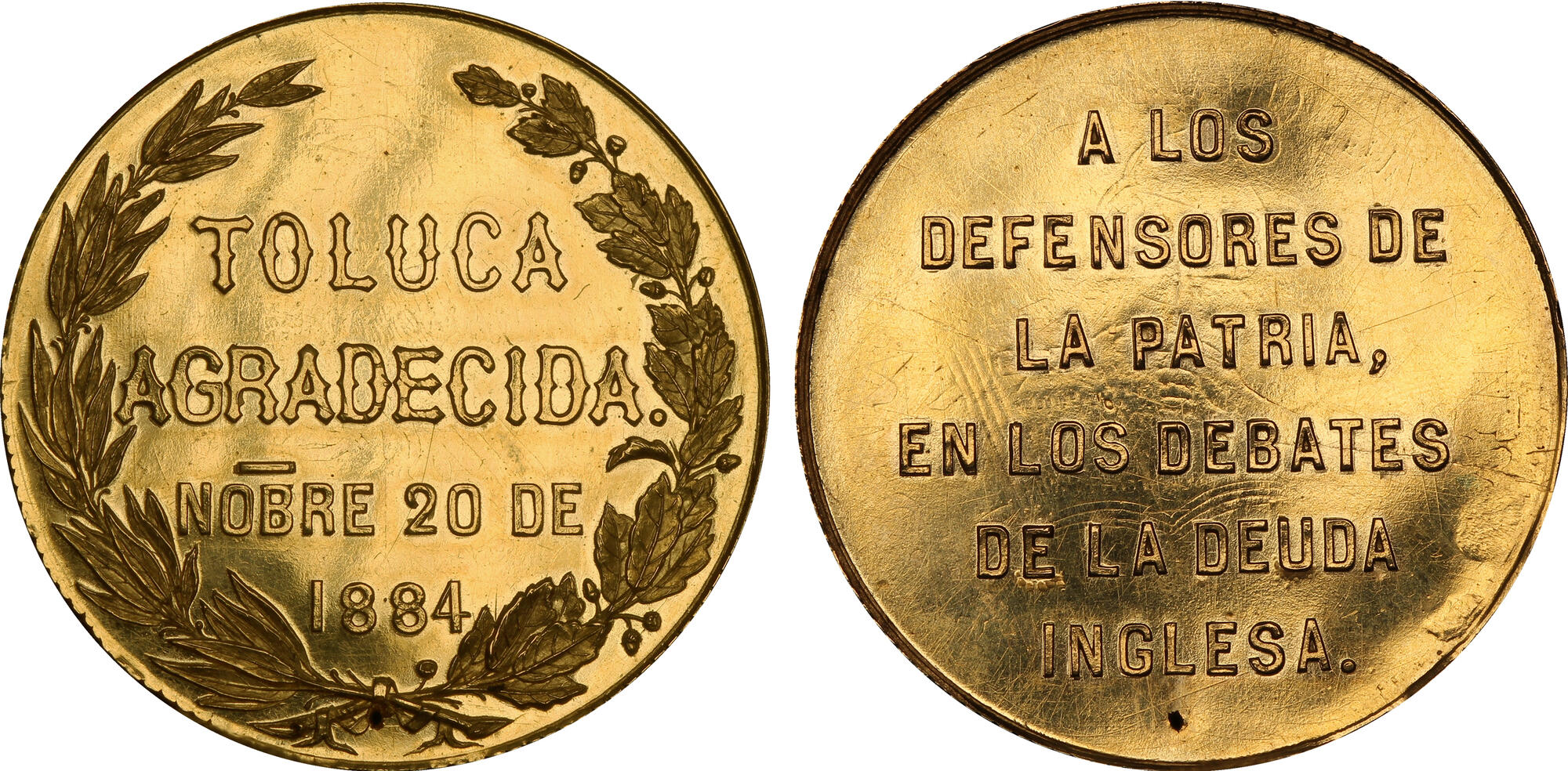 |
Match 5:
| Briggs & Bustos > Auction 18 | Auction date: 4 September 2026 |
| Lot number: 362 Price realized: 82,500 MXN (Approx. 4,889 USD / 4,209 EUR) Note: Prices do not include buyer's fees. | |
| Lot description: Grove O-26, F&F-307 VAR, Olvera p. 284-288 - Cruz de la Imperial Orden de Guadalupe, al M Civ y Virs, 1864-1867. XF- Tercera época. Reinstaurada durante el Segundo Imperio de Maximiliano y reformada el 10 de Abril de 1865. Cruz de Caballero Supernumerario, otorgada por las ciencias, el arte, la diplomacia y por la buena voluntad mostrada por los seguidores del Imperio. Dimensión de 40 x 37 milímetros, 19.98 gramos de peso incluyendo cinta. Elaborada en plata dorada con esmaltes por la firma C. F. Rothe & Neffe (Viena, Austria), fabricante que llegó a desplazar a otras firmas joyeras durante el Imperio de Maximiliano, favorecida por sus vínculos y relación con la Corona austriaca. De hecho, se tiene constancia de la relación con Maximiliano incluso antes de partir a México. Por otra parte, de la destacada investigación "THE HISTORY OF THE IMPERIAL ORDER OF GUADELOUPE IN THE ARCHIVES OF C.F. ROTHE" realzada por Daniel Molina López se sabe por medio de correspondencia de Sebastián Scherzenlechner, consejero de Estado y jefe del Gabinete Civil de la Corona mexicana, y de Jacob von Kuhacsevich, archivero y tesorero de la Casa Real de Maximiliano, solicitaban la fabricación y entrega de insignias para las órdenes mexicanas. Las cruces de Rothe, se distinguen por presentar gran detalle y un trabajo minucioso realizado bajo el esmalte, nótese el patrón del exergo del lado del reverso, los resplandores de la virgen y el plumaje del águila esculpida con fabuloso nivel de detalle. La prenda que aquí se ofrece presenta signos de uso; pérdidas de esmalte y contacto en áreas cercanas a las volutas de la cruz, así como en la imagen de la virgen, con poca presencia del dorado de origen, la cinta un poco sucia y desfilachada en bordes ENGLISH: Grove O-26, F&F-307 VAR, Olvera pp. 284-288, Cross of the Imperial Order of Guadalupe, Civil Merit and Virtues, 1864-1867. XF. Third period. Reinstated during the Second Mexican Empire under Maximilian and reformed on April 10, 1865. Supernumerary Knight's Cross, awarded for sciences, arts, diplomacy, and for the loyalty and goodwill shown by supporters of the Empire. Measures 40 x 37 millimeters, weighing 19.98 grams including the ribbon. Crafted in gilded silver with enamels by the firm C. F. Rothe & Neffe (Vienna, Austria), a manufacturer that came to surpass other jewelry firms during the reign of Maximilian, favored by its connections and relationship with the Austrian Crown. In fact, evidence exists of its association with Maximilian even before his departure for Mexico. Furthermore, the notable research work "THE HISTORY OF THE IMPERIAL ORDER OF GUADELOUPE IN THE ARCHIVES OF C.F. ROTHE" by Daniel Molina López reveals through correspondence from Sebastián Scherzenlechner, State Councilor and head of the Civil Cabinet of the Mexican Crown, and Jacob von Kuhacsevich, archivist and treasurer of Maximilian's Royal Household, that the manufacture and delivery of insignia for Mexican orders were requested. Rothe crosses are distinguished by their exceptional detail and meticulous craftsmanship beneath the enamel. Note the exergue pattern on the reverse, the radiance surrounding the Virgin, and the eagle's plumage, sculpted with a remarkable level of detail. The piece offered here shows signs of use, including enamel losses and contact in areas near the cross volutes and around the image of the Virgin, with little remaining original gilding. The ribbon is somewhat soiled and frayed along the edges. Estimate: 40500 - 45000 MXN | 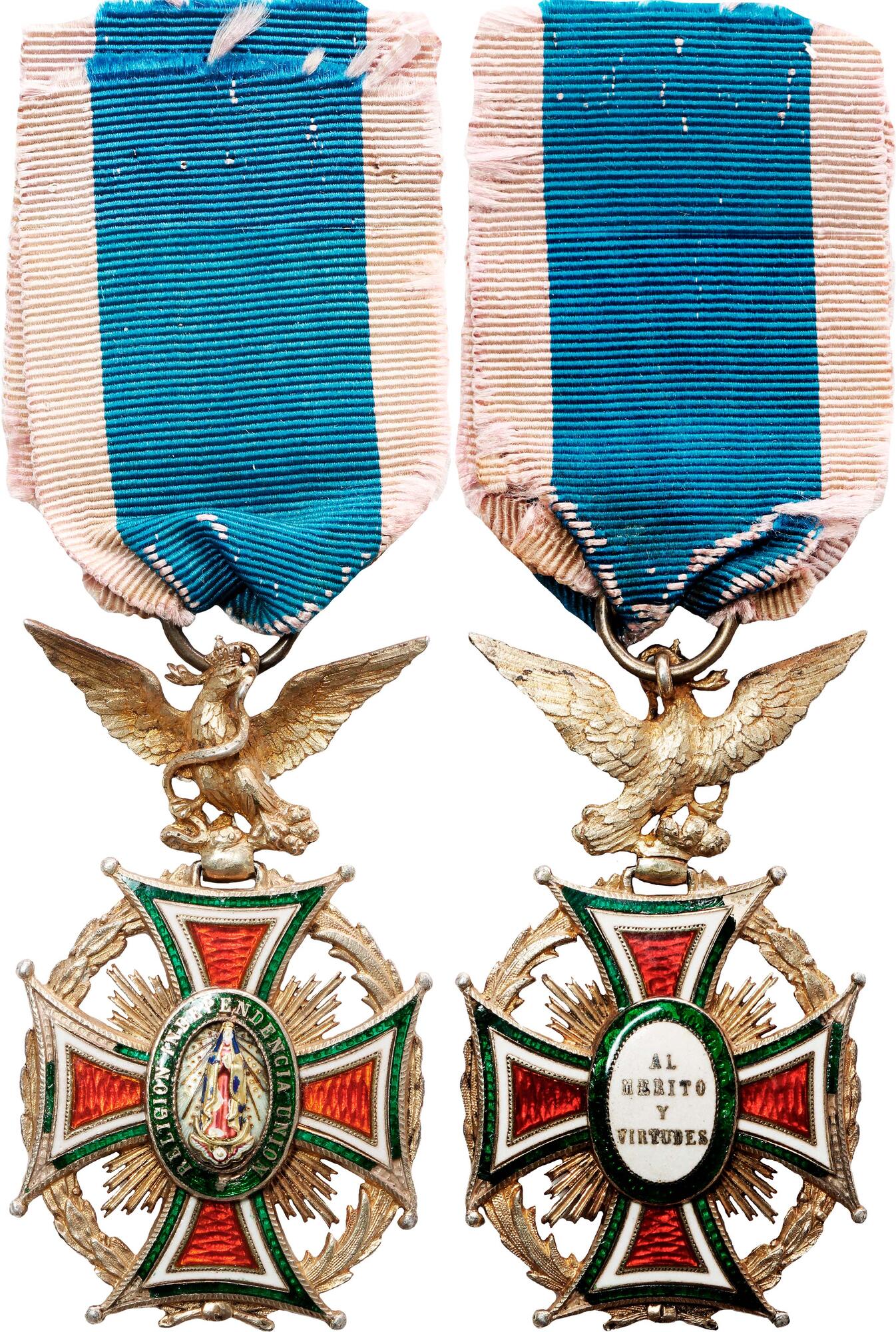 |
