

Our partner for world banknotes research

| Numisfitz GmbH > Auction 8 | Auction date: 10 May 2026 |
| Lot number: 1242 Price realized: 150 EUR (Approx. 177 USD) Note: Prices do not include buyer's fees. | |
| Lot description: WALLACHIA. Mircea I cel Bătrân (1386-1395 and 1396-1418). AR Ducat ("cu cavaler"). Posthumous issue, or a coinage struck by one of his sons who contended for the Wallachian throne after his death. Obv: Ruler standing en face, holding spear and globus cruciger. Rev: Eagle standing left on helmet, head right. MBR 197. Condition: Patina, very fine. Rare. Weight: 0,40 g. Diameter: 13x15 mm. Starting price: 150 EUR | 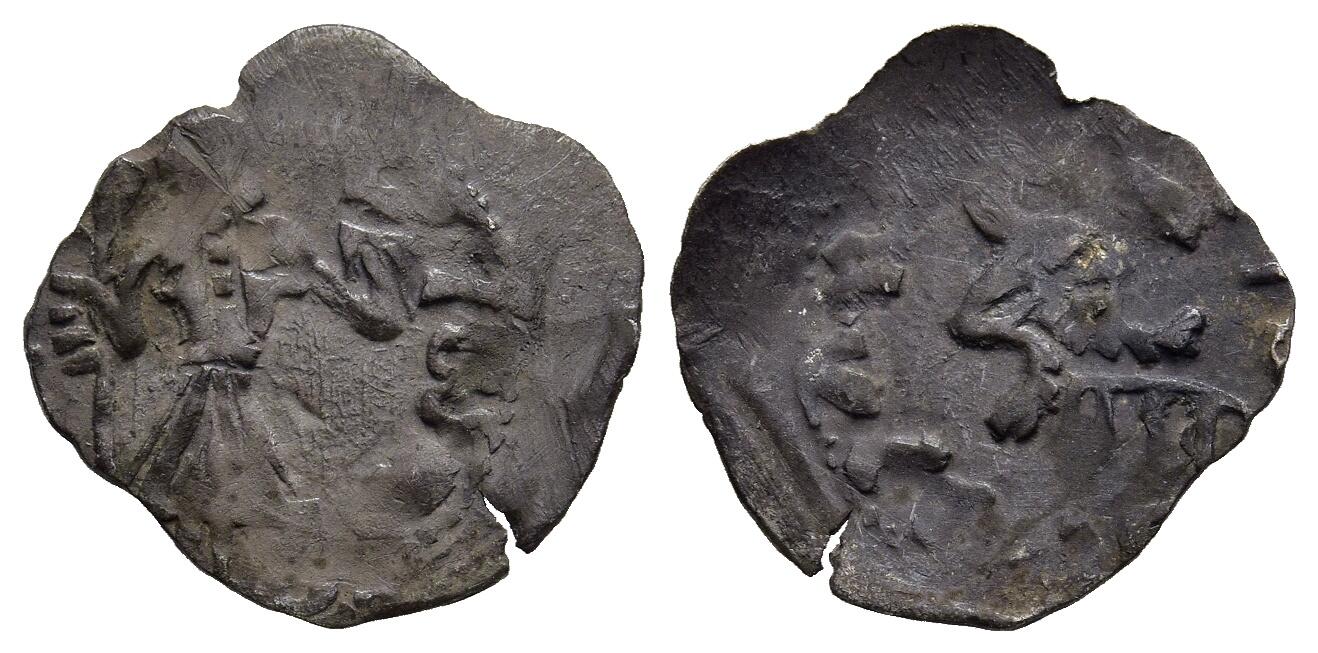 |
Match 1:
| Numisfitz GmbH > Auction 10 | Auction date: 11 October 2026 |
| Lot number: 375 Price realized: 130 EUR (Approx. 146 USD) Note: Prices do not include buyer's fees. | |
| Lot description: WALLACHIA. Mircea I cel Bătrîn (1386-1394 and 1397-1418). AR Ducat or Dinar. Obv: Iω MI∂VαBo Mircea standing facing, holding lance and globus cruciger. Rev: + Iω MI∂VαB. Eagle standing left on helmet, head right. MBR 197. Condition: Very fine. Weight: 0,47 g. Diameter: 14 mm. Starting price: 100 EUR | 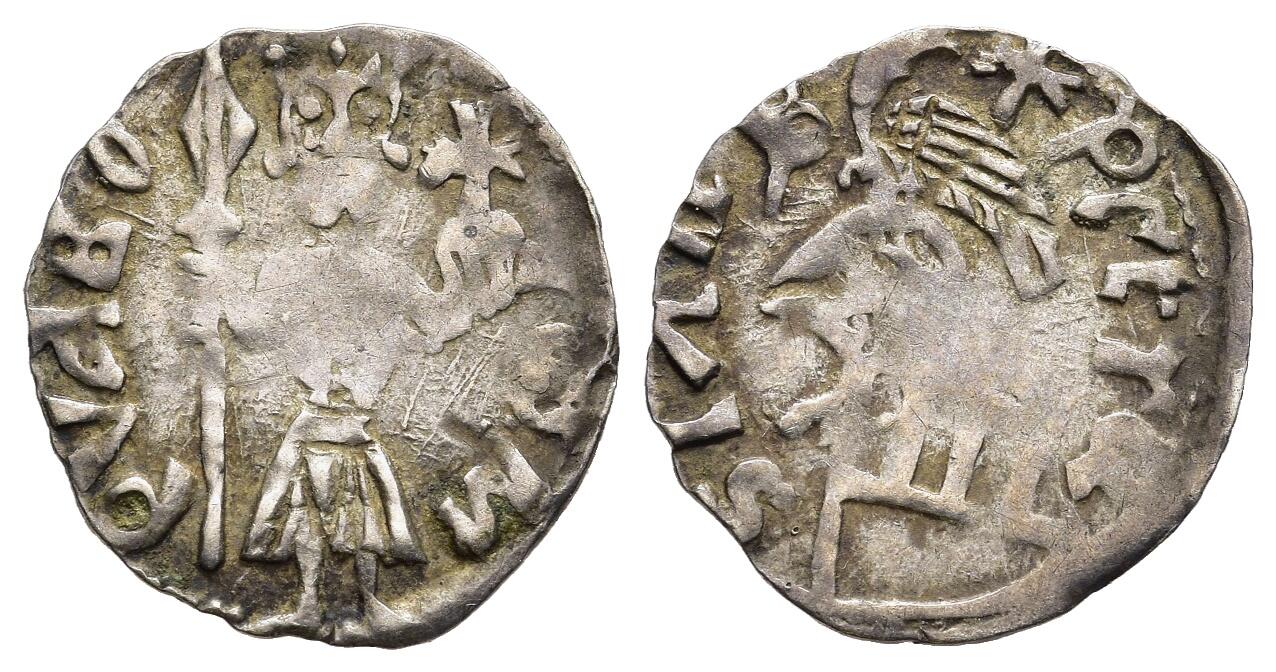 |
Match 2:
| Leu Numismatik AG > Web Auction 45 | Auction date: 7 September 2026 |
| Lot number: 3633 Price realized: 10,000 CHF (Approx. 12,344 USD / 10,627 EUR) Note: Prices do not include buyer's fees. | |
| Lot description: WALLACHIA. Mircea I cel Batrân (the Elder), 1386-1394 and 1397-1418. Ducat (Silver, 18 mm, 0.84 g, 6 h). +ⲰBΛИ[...]- В - OЧ Mircea I standing facing, holding crude globus cruciger in his left and cross-tipped staff in his right hand. Rev. Christ, nimbate, seated facing on decorated throne and holding book of Gospels with both hands; in field to left and right, IC / B - XC / O. MBR -. TRD -. Apparently unpublished, of great numismatic interest and beautifully toned. Areas of weakness and some flan faults on the edge, otherwise, very fine. Within the otherwise well-documented coinage of Mircea I cel Bătrân, grandfather of Vlad III Tzepesh (the Impaler), who is commonly known today as Dracula, this type appears to have been entirely unknown until now. The die combination itself is unpublished: a standing ruler holding a cross-tipped staff on one side and Christ on the other. Adding to the mystery are the heavily corrupted obverse legend and the two unidentified symbols placed beneath 'IC – XC' on the reverse. At first glance, these irregularities might suggest a contemporary imitation or counterfeit. The unusually high silver content and substantial weight of the present specimen, however, argue strongly against such an interpretation. Known contemporary counterfeits of Mircea's coinage, including those represented in the large hoard discovered at Târgoviște in 1963, were either produced with a base-metal core or struck in silver of markedly reduced fineness. The present coin therefore remains difficult to place within the established framework of Mircea's coinage and may represent a previously undocumented and highly unusual issue whose precise nature has yet to be determined. This lot can be shipped to a US address. Starting price: 100 CHF | 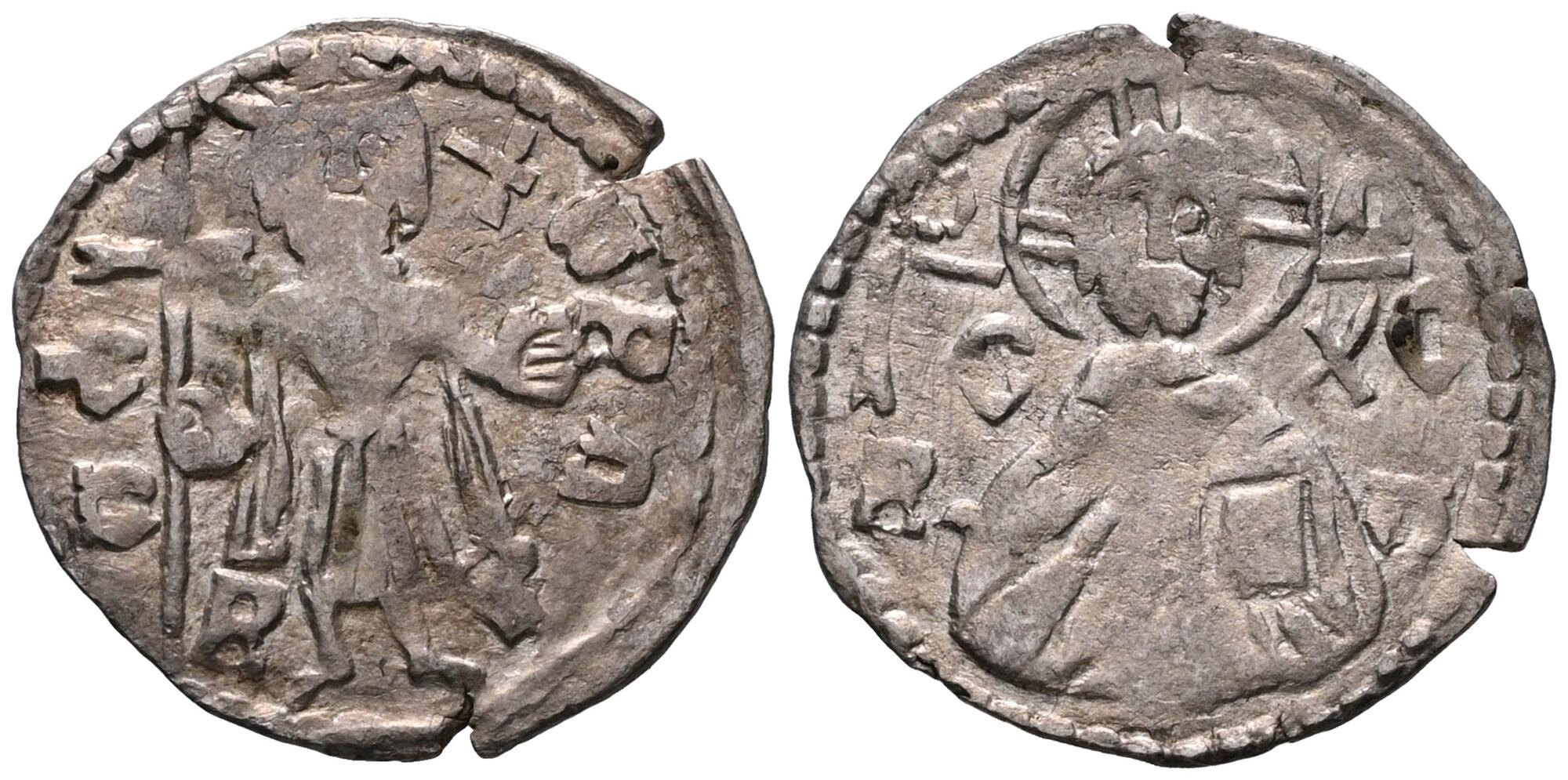 |

Match 3:
| Sovereign Rarities Ltd > Auction 22 | Auction date: 3 June 2026 |
| Lot number: 91 Price realized: 20,000 GBP (Approx. 26,874 USD / 23,142 EUR) Note: Prices do not include buyer's fees. | |
| Lot description: George V (1910-36), Uniface Trial Pattern Reverse for a Crown, 1926, designed by Francis Derwent Wood, engraved by Humphrey Paget, struck with a matt surface, classical figure personifying Britannia seated on a chaise right, wearing chain mail and draped, olive branch in leading hand, caduceus in other hand, plumed helmet at feet, date in Roman numerals in exergue, MCMXXVI, legend surrounding design, GIVE PEACE IN OUR TIME O LORD, raised linear border surrounding all, rev. blank, edge milled (cf.KM TSA6 note; Royal Mint Museum 1865; Bull 3630A R7). With matt proof finish on obverse which is a little speckled, unevenly toned on reverse, practically as struck, has been slabbed and graded by NGC as PF63, this being the only example known with a blank reverse of this intriguing pattern of the highest rarity. NGC Certification 2011260-436 with A Tokyo Collection label and incorrectly identified as Linecar and Stone 50A and encapsulated as silver, though previously catalogued as silvered copper and mentioned as such in the footnote in Krause. Whatever the metal is, the rarity and history of this coin as a component part of a set as listed below, is what hold gravitas and outweighs the metal composition.Provenance:Ex A Tokyo Collection, sold via World Coins Japan over the period from 2010-2020 as component part of set.Ex A. H. Baldwin, Fixed Price List, Summer 2012, item PF002 as component part of set and as silvered copper.Ex Stacks Bowers, New York, 8th January 2016, lot 41081 now offered as single coin, sold for $28,000 hammer (same auction contained the companion Halfcrown).The other one (or two) known uniface reverse silver patterns of this coin have the word MODEL emblazoned across the otherwise blank face. There is one complete pattern coin now known in an institutional collection with a more regular George V obverse as was seen used for the Wreath Crown from 1927, which therefore may have been produced later than 1926 date upon it. Prime Minister Stanley Baldwin first used the phrase Give Peace in our time, O Lord as a closing prayer to a speech in the House of Commons given on 6th March 1925 in a debate on Industrial Peace where Mr Baldwin opposed a private member's bill targeting trade union political levies, which would have caused unnecessary conflict. The speech closed with the emotional words on this pattern coin as an appeal which was successful in that the bill being debated did not pass.Just three days before these stirring words were uttered on the 3rd March, coin enthusiast and Member of Parliament Sir Charles Oman had asked a question in the House of Commons of the Chancellor of the Exchequer and de facto Master of the Mint, Winston Churchill why the Standing Committee on Coins Medals and Decorations, (the forerunner of the Royal Mint Advisory Committee), having been in existence for the last few years for the advancement of artistic merit on the coinage, had not so far suggested a single artistic change to the current designs Mr Churchill answered that though nothing had been so far suggested, he was sure the committee would, whenever it became necessary. It seems this answer inspired Charles Oman to engage artist and sculptor Francis Derwent Wood R.A., who was on that standing committee, to come up with a series of new coinage designs with which Prime Minister Stanley Baldwin's inspiring words became the legend for the reverse of this pattern crown. The Crown design was the leading coin of six silver denominations proposed as trial pieces including the Halfcrown, Florin, Shilling, Sixpence and Threepence, engraved by Humphrey Paget in their metallic form. These designs were the first proposed at the instigation of Charles Oman, with more traditional but stylised designs for the Halfcrown and Shilling, though much more innovative ones were put forward for this Crown and the floral type Florin, Sixpence and Threepence. The premature death of Francis Derwent Wood at the age of 54 on 19th February 1926 may well have contributed to the cessation of this coinage project moving further forward.Meanwhile, the Advisory Committee met for the 37th time at the Royal Mint on the 4th March 1925 where the question and answer in the House of Commons the day before was discussed and it seems gestation towards a new coinage was already in motion, as George Kruger Gray had already been selected as an artist candidate for proposals for a new coinage along with Eric Gill. At the 39th meeting of 13th May 1925 patterns, perhaps in plaster, for Threepences, Sixpences and Shillings by Eric Gill were examined by the committee as well as detailed sketches for all the silver coinage by George Kruger Gray, as well as some rough drawings for coinage by someone who wishes to remain anonymous which we can speculate was perhaps Derwent Wood, as he was in attendance at the meeting as a committee member. It was decided that the Kruger Gray design of Florin and Shilling should advance to plaster models.At the 40th meeting of the 16th July 1925 actual pattern threepences by Eric Gill were examined but thought not suitable at that juncture in time to go ahead with the modified head in combination with the reverse; for the modified effigy adopted from 1926 coinage onwards was also examined. The Kruger Gray plasters were now ready to examine but required changes. A letter from the Royal Society of British Sculptors was reproduced in the minutes and was discussed at the meeting, as this Society had a desire to be more involved with the Mint in their designs in the shared quest for advancement of medallic art, no doubt on the back of Oman's parliamentary question and the reports in the press since, on the matter of coinage design.Those in attendance at the 41st committee meeting of the 29th July 1925 considered 27 drawings on cardboard for coinage, of which three were approved to go towards pattern pieces. Perhaps these were Derwent Wood's as no artist name is mentioned and it is suggested a rose design maybe used on the Florin and a thistle on the threepence. Five drawings by George Kruger Gray were also approved to advance to become pattern pieces. Nothing else relevant is reported at the subsequent two meetings and then there is a long gap until the 44th meeting of 3rd June 1926 when the sad death of Francis Derwent Wood is reported, who was one of the original members of the committee, and that the Royal Academy would be approached to suggest a suitable replacement. Meanwhile two sets of pattern coins are predicted to be ready in time for the July meeting without further elaboration on whose sets they were.The 46th meeting of 16th July 1926 reveals the two pattern sets for the first time, one being by Derwent Wood and the other by George Kruger Gray, along with the three pattern pieces by Eric Gill. After a discussion the Gill pieces were dismissed as unsuitable, but the discussion about the two sets of coins was adjourned to the next meeting as an agreement could not be reached as to whether a change in the design of the coinage was justifiable to report to the Cabinet.The 47th meeting took place just six days later to continue the discussion on 22nd July 1926, where it was unanimously decided that a change in the coinage designs would go ahead and that the George Kruger Gray designs would be forwarded to the Cabinet, along with the rose design for the Sixpence with a note from the Chairman recommending their immediate adoption in currency as a distinct improvement in the current designs, as well as being technically better for coining and to encourage younger artists and stimulate interest in coinage design. Note the Crown design was not forwarded and not thought necessary to revive as a currency denomination, but the Derwent Wood design as we have for sale here was to be forwarded to the sculptor E Carter Preston to work upon further refinement or even redesign.Photographs of a Crown design by E Carter Preston (presumably in plaster or other media) were examined along with a new florin design at the 48th meeting on the 5th November 1926 with no further comment. The 49th meeting of the 30th November 1926 reveals that the E Carter Preston designs, presumably revisions of the Crown design we have offered for sale here were not thought worthy of continuing with and that George Kruger Gray's Crown design had merit and could show some improvement to the depiction of the crown. It was at this point that the Derwent Wood design for the Crown was abandoned for good and the full set exhibited at the 46th meeting may well be the set that this Crown was once part of when last offered for sale in its entirety in 2012.After continued gestation the Kruger Gray designs ultimately ended up being adopted as new coinage dated 1927, which were issued for sale to the public as proof sets from Christmas of 1927. We are left with the enigma of these extremely rare trial pieces with Derwent Wood's designs as evidence of a coinage that could have been, and the Crown herewith offered for sale was once a component part of a whole set that was most likely the one shown at the 46th meeting of the Royal Mint Committee. The Peace Crown Model in the Royal Mint Museum as inventory number 1865 and on their website was once the property of Sir Charles Oman (1860-1946) and donated by his son to them in 1974. Starting price: 20000 GBP | 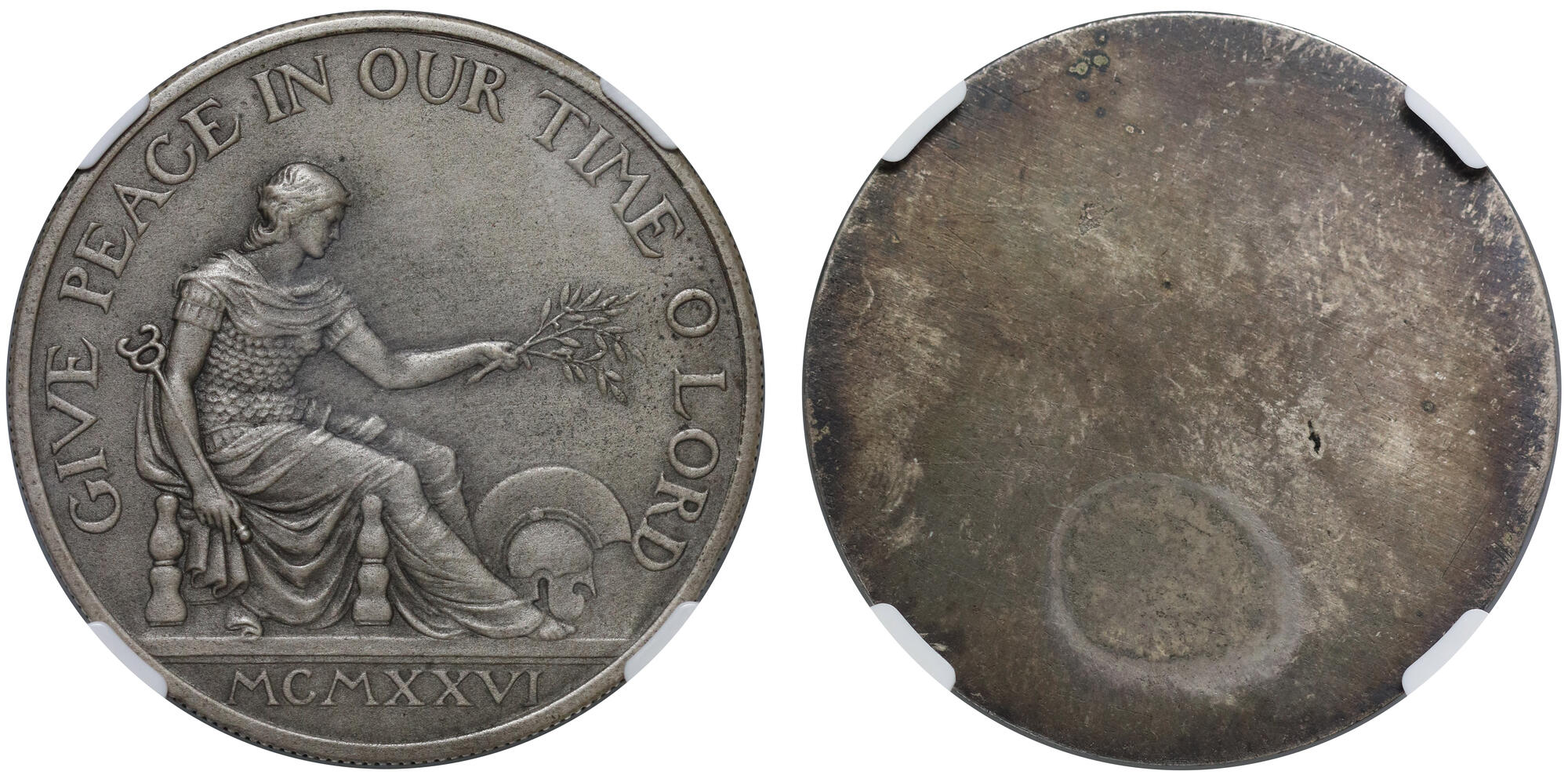 |
Match 4:
| Leu Numismatik AG > Auction 25 | Auction date: 3 November 2026 |
| Lot number: 1304 Price realized: 55,000 CHF (Approx. 67,081 USD / 59,910 EUR) Note: Prices do not include buyer's fees. | |
| Lot description: Umayyad Caliphate. Anonymous issue, temp. Muʿāwiya I ibn Abī Sufyān, AH 41-60 / AD 661-680. Solidus (Gold, 21 mm, 4.34 g, 6 h), dechristianized pseudo-Byzantine solidus, uncertain mint, probably Syria, no date. Heraclius, Heraclius Constantine and Heraclonas, wearing crowns with the crossbars removed, standing facing, each holding in his right hand a globus cruciger with the crossbar removed. Rev. VICTORIA AVGЧB / CONOB Modified cross potent set on four steps, the crossbar removed; I and A in fields. Bernardi 4. Miles, Earliest Arab Gold Coinage, Group IV var. (different field letters). Walker p. 18, 54 var. (different field letters). Of the highest rarity and of great historical importance. In exceptional condition, and a remarkable witness to one of the great religious transformations of world history, standing at the threshold between the Byzantine-Christian and early Islamic worlds. Tiny marks and minor flan faults on the edge, otherwise, extremely fine. This extraordinary solidus belongs to the earliest and most experimental phase of Arab-Islamic gold coinage, before the introduction of the fully epigraphic Umayyad dinar under ʿAbd al-Malik (AH 65-86 / AD 685-705). Its model is the late Byzantine solidus of Heraclius with his sons Heraclius Constantine and Heraclonas (SB 758 ff.), but its explicitly Christian symbols have been deliberately altered: the crossbars have been removed from both the crowns worn by the standing figures and the globes they hold, while the reverse cross potent on steps has been reduced to a modified vertical form. The result is a remarkable witness to the religious as well as political transformation of the seventh-century Near East. The coin retains the familiar structure and visual authority of Byzantine-Christian gold, with three imperial figures, a Latin-style victory legend and the conventional CONOB mark, yet systematically modifies its most overtly Christian elements to accommodate the emerging Islamic religious and political order. It remains figural and unmistakably Byzantine in appearance, but its imagery has acquired a fundamentally different religious meaning. The type is also important as a visual precursor to the later Umayyad Standing Caliph dinars, which likewise combine a standing ruler on the obverse with a modified cross-on-steps reverse before the complete epigraphic reform of AH 77 / AD 696/7. In this sense, the coin stands at a crucial threshold: between Byzantine-Christian imperial imagery and the development of a distinctively Islamic visual and monetary language. Few coins embody so vividly the profound religious transformation that accompanied the emergence of the early Islamic state. The I - A marks in the reverse fields add further interest. Related specimens are known with different field-letter combinations, but this variety is of the highest rarity. Whether these letters served as issue marks, copied Byzantine control marks, or formed part of another system remains uncertain. The original purpose of these coins remains debated, whether for local circulation in Syria and the southern Levant, for payments connected with Byzantine-Arab diplomacy, or for both. Their rarity today reflects the limited and experimental nature of the issue. More importantly, their transformation of the inherited Christian imagery of Byzantine gold gives them an exceptional place in the history of early Islamic coinage, capturing in a single object one of the great religious and cultural transitions of the early medieval world. This lot cannot be shipped to a US address. Estimate: 35000 CHF | 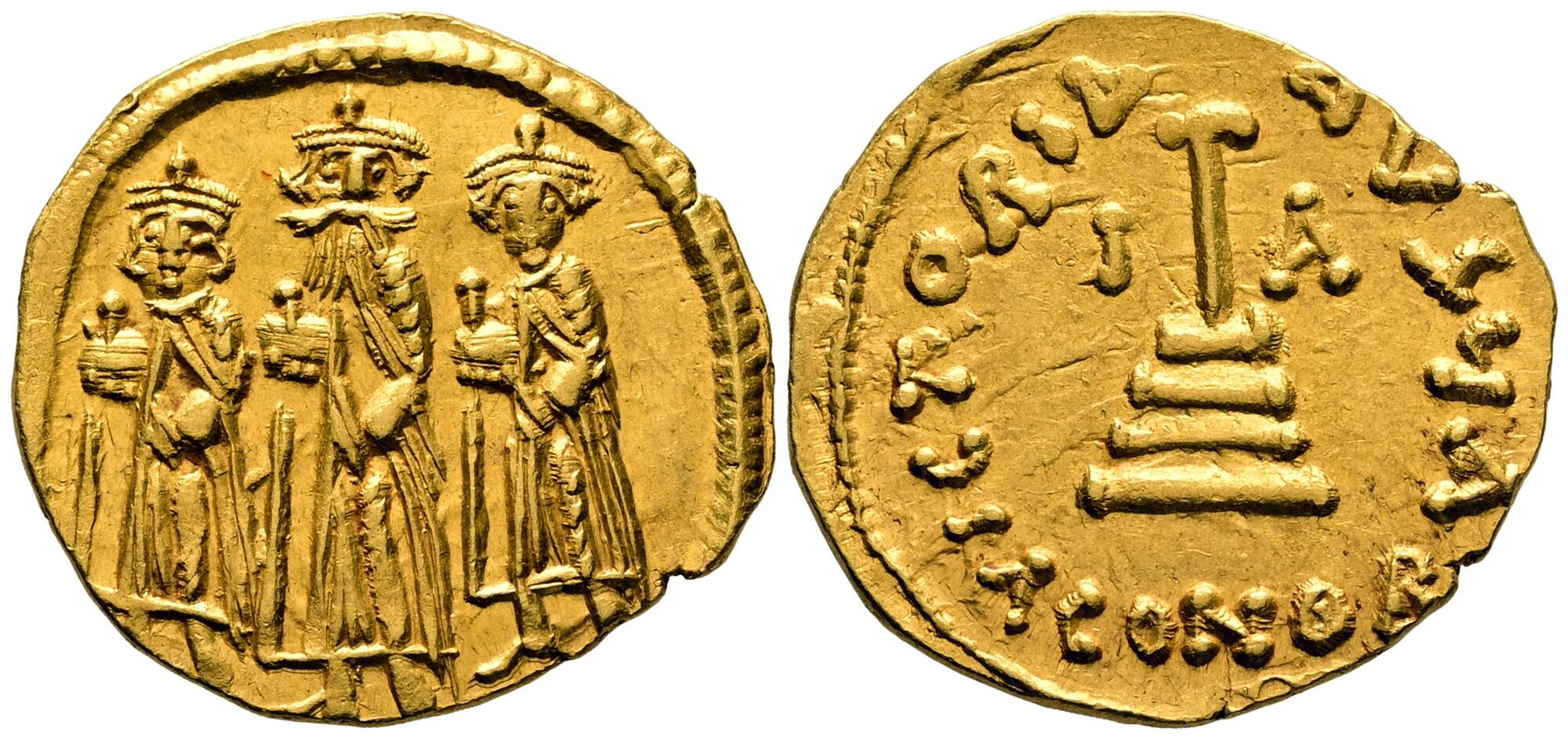 |
Match 5:
| Numisfitz GmbH > Auction 10 | Auction date: 11 October 2026 |
| Lot number: 379 Price realized: 55 EUR (Approx. 62 USD) Note: Prices do not include buyer's fees. | |
| Lot description: WALLACHIA. Mihail I (1418–1420). AR Ducat. Obv: [Iω] MX - ... The ruler standing en face, holding a lance and a globus cruciger. Rev: Iω M - Л BO.... Eagle on helmet and divided coat of arms. MBR 223 var. Condition: Very fine. Rare. Weight: 0.34 g. Diameter: 12 mm. Starting price: 40 EUR | 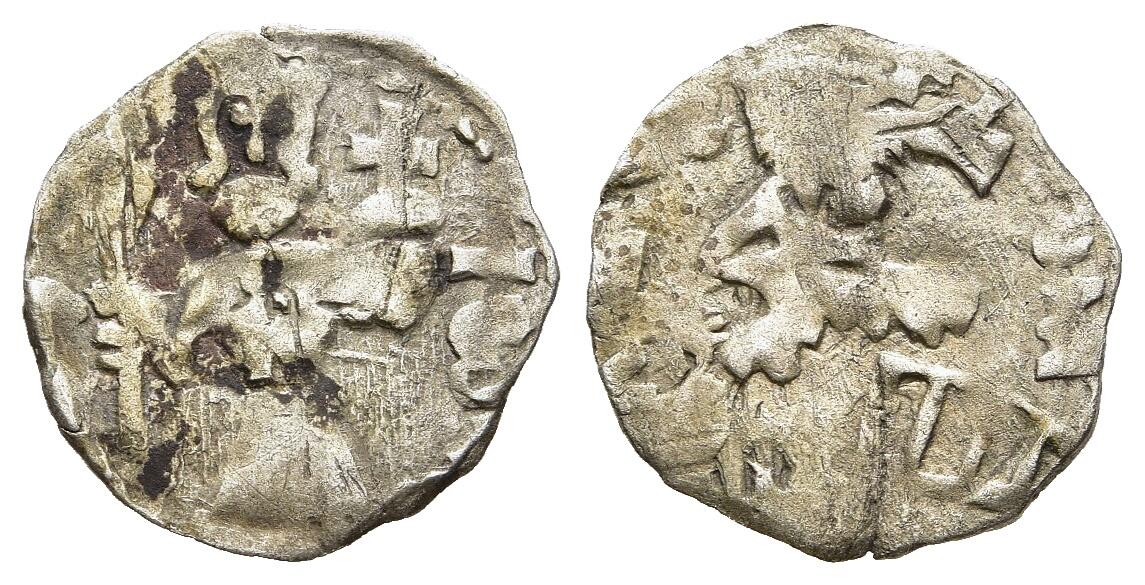 |
