

Our partner for world banknotes research

| Classical Numismatic Group > Electronic Auction 614 | Auction date: 29 July 2026 |
| Lot number: 586 Price realized: 60 USD (Approx. 53 EUR) Note: Prices do not include buyer's fees. | |
| Lot description: ARABIA, Bostra. Elagabalus. AD 218-222. Æ (17mm, 4.06 g, 6h). Laureate head right / Motab altar on which are three piles of holy stones, topped by sacred baetyl, one large with a smaller pile to either side; staircase leading up to altar from right. Kindler, Bostra 33b; Spijkerman 44; RPC VI Online 9333; Rosenberger 35; Sofaer 38-9. Earthen red-brown surfaces. Good Fine. Estimate: 100 USD |  |

Match 1:
| Classical Numismatic Group > Electronic Auction 619 | Auction date: 21 October 2026 |
| Lot number: 528 Price realized: This lot is for sale in an upcoming auction - Bid on this lot  | |
| Lot description: ARABIA, Charachmoba. Elagabalus. AD 218-222. Æ (18mm, 6.01 g, 12h). Laureate head right; to right, star / Motab altar with steps leading up to it, on which is a column flanked by baetyls; to right, priest seated left, holding vase(?). Spijkerman 5; RPC VI Online 9365; Rosenberger 2; Sofaer 3 var. (bust). Rough brown surfaces. Near VF. Estimate: 100 USD | 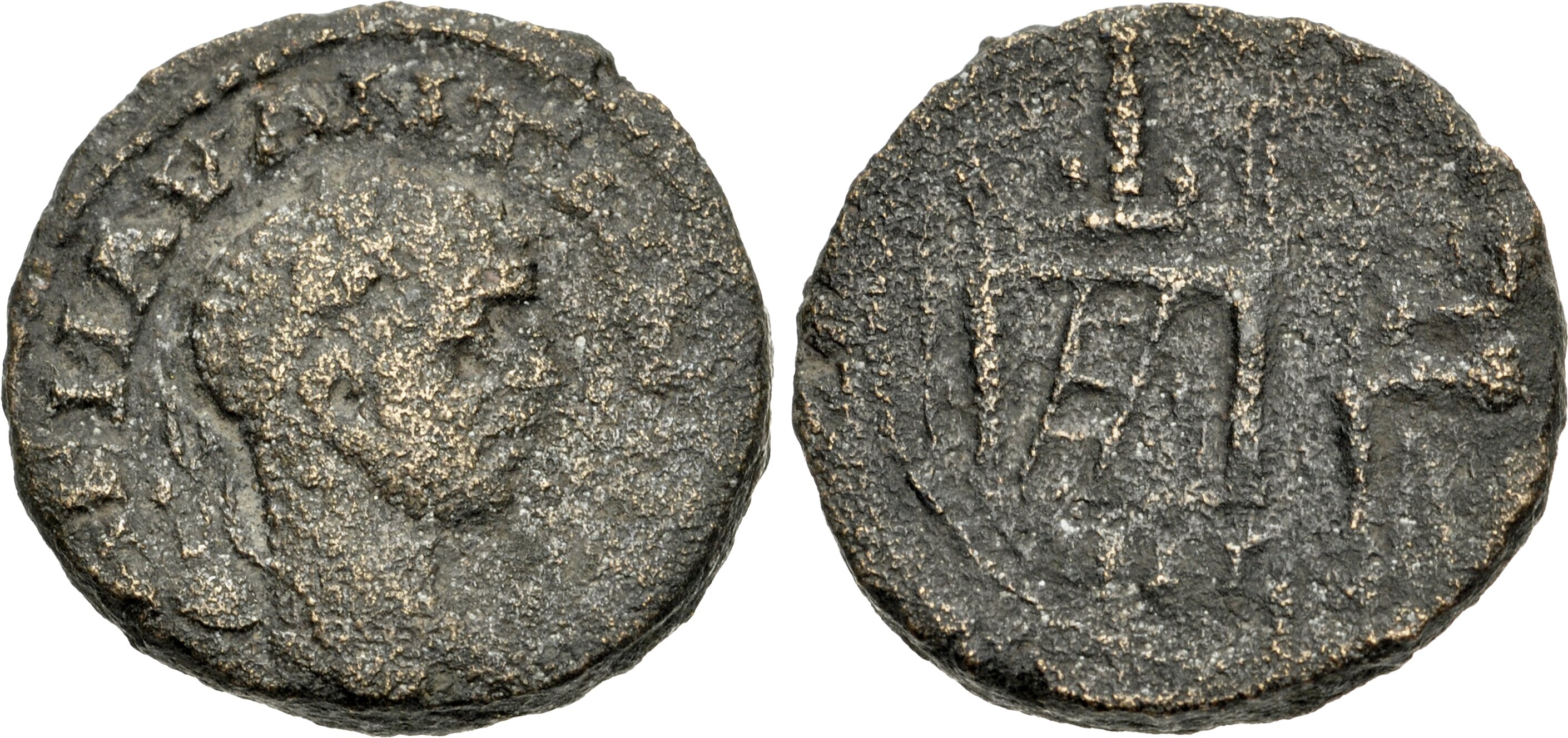 |
Match 2:
| Classical Numismatic Group > Electronic Auction 608 | Auction date: 29 April 2026 |
| Lot number: 584 Price realized: 120 USD (Approx. 103 EUR) Note: Prices do not include buyer's fees. | |
| Lot description: PHOENICIA, Orthosia. Elagabalus. AD 218-222. Æ (23mm, 7.52 g, 12h). Dated CY 533 (AD 221/2). Laureate head right / Tetrastyle temple, with arched central bay, containing facing statue of Astarte, wearing kalathos, holding long scepter and being crowned by Nike standing on short column to right; doorways to left and right with stairs leading to each; below, river-god swimming right; in exergue, altar between ΓΛ Φ (date). RPC VI Online 8250.11 = Dow, ACTTB, p. 192 (this coin); Rouvier 880. Green patina with earthen highlights, slight roughness, obverse flan flaw. Near VF. From the Joseph A. Dow Collection. Ex D. Alighieri Collection (Classical Numismatic Group Electronic Auction 205, 25 February 2009), lot 331. The present coin is published in Joseph A. Dow, Ancient Coins Through the Bible (Mustang, OK: Tate, 2011), in the chapter Paul's First Missionary Journey (AD 47–49). CNG is pleased to offer coins from the collection of the author here, and in subsequent electronic auctions. Estimate: 150 USD |  |
Match 3:
| Numismatik Naumann (formerly Gitbud & Naumann) > Auction 165 | Auction date: 5 April 2026 |
| Lot number: 340 Price realized: 110 EUR (Approx. 127 USD) Note: Prices do not include buyer's fees. | |
| Lot description: Roman Provincial Coins ARABIA. Bostra. Elagabalus (218-222). Ae. Obv: ΑΥΤ ΚΕϹΑΡ ΑΝΤωΝΙΝΟ. Laureate head right. Rev: ΔΟΥϹΑΡΗϹ ΘΕΟϹ. Motab altar with staircase, seen from right, supporting three piles of holy stones, topped by a sacred baetyl. RPC VI online 9333; Spijkerman 44.1. Condition: Very fine. Weight: 4.03 g. Diameter: 28 mm. Estimate: 50 EUR | 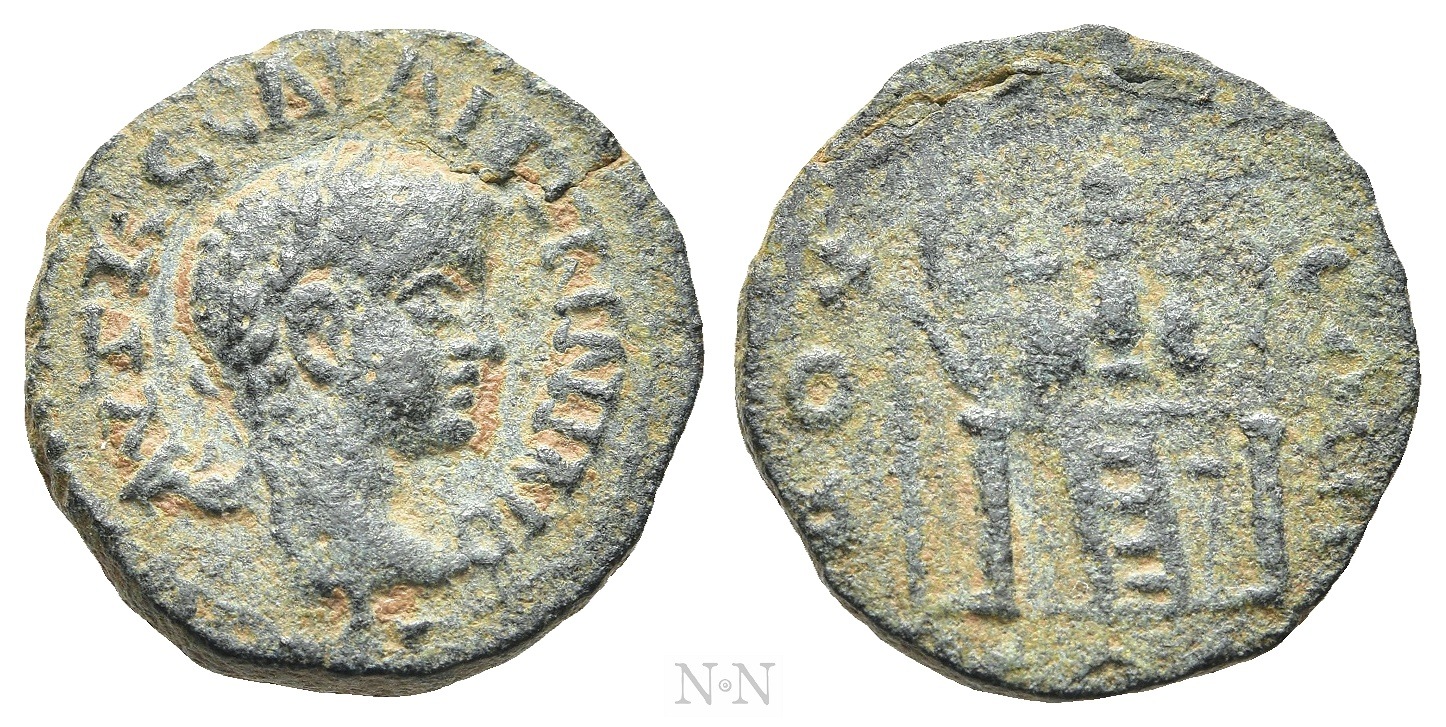 |
Match 4:
| Heritage World Coin Auctions > Showcase Auction 61636 | Auction date: 10 August 2026 |
| Lot number: 21200 Price realized: 60 USD (Approx. 52 EUR) Note: Prices do not include buyer's fees. | |
| Lot description: Ancients ARABIA. Charachmoba. Elagabalus (AD 218-222). AE (19mm, 6.68 gm, 12h). NGC Fine 4/5 - 3/5. Α Κ Μ ΑΥ ΑΝΤωΝΙΝΟ, laureate head of Elagabalus right; star before / ΧΑΡ-ΑΧ-ΜωΒΑ (partially retrograde), priest seated left, holding vase(?), before motab altar with staircase, supporting three piles of holy stones, topped by a sacred baetyl. RPC VI online temporary 9365. From the Eyeappealing Collection. Elagabalus, the posthumous nickname for Sextus Varius Avitus Bassianus, was emperor at fourteen years old and died at eighteen. Despite his short tenure, rumors abound about his lifestyle as a teenage emperor. His grandmother, Julia Maesa, spread rumors that he was the son of Caracalla, a rumor supposedly confirmed by his mother, Julia Soaemias, and Cassius Dio recounts that the young ruler had four wives, including a Vestal Virgin, and male courtiers who were rumored to be his lovers. He brought the Stone of Emesa to Rome, as is featured on some issues of his coinage, which was a religiously controversial decision. When he fell out of favor, his mother and grandmother orchestrated for him to take Severus Alexander as his heir, which he unsuccessfully tried to undo. When he attempted an overreach of political violence, members of the Praetorian Guard killed Elagabalus and his mother, Julia Soaemias, and dragged their bodies through the streets. www.HA.com/TexasAuctioneerLicenseNotice https://coins.ha.com/itm/ancients/roman-provincial/arabia-charachmoba-elagabalus-ad-218-222-ae-19mm-668-gm-12h-ngc-fine-4-5-3-5/p/61636-11142.s?type=DA-DMC-CoinArchives-WorldCoins-61636-08102026 HID02906262019 © 2026 Heritage Auctions | All Rights Reserved Certification number: NGC 6158597010 |  |

Match 5:
| Classical Numismatic Group > Auction 133 | Auction date: 15 September 2026 |
| Lot number: 581 Price realized: 1,100 USD (Approx. 953 EUR) Note: Prices do not include buyer's fees. | |
| Lot description: Elagabalus. AD 218-222. AR Denarius (18.5mm, 3.73 g, 11h). Uncertain eastern mint. Struck AD 218-219. Laureate head right / Slow quadriga right, bearing the sacred Stone of Emesa, upon which is an eagle, surrounded by four sacred parasols. RIC IV 196; RSC 269. VF. At the age of fourteen, Varius Avitus Bassianus (better known as Elagabalus or Heliogabalus) inherited the office of high priest of the sun god El-Gabal at Emesa in Syria. The deity was worshipped in the form of a conical sacred stone, or baetyl, likely a large meteorite. When an unlikely coup made him emperor in June of AD 218, Elagabalus determined to take the stone with him to Rome and introduce its worship to the whole empire. During his reign, the emperor was devoted to promoting the cult of El-Gabal, building a lavish temple on the Palatine Hill to house the stone. For a brief period, the exotic eastern deity nearly came to dominate the Roman Pantheon. This issue, struck in AD 218-219, likely refers to the journey from Emesa to Rome. The procession was repeated every year in the transfer of the stone from its principal temple in Rome to its "summer home," a large and richly decorated temple in the suburbs. Describing the transfer, Herodian (V.6.7) writes: A six-horse chariot bore the sun god, the horses huge and flawlessly white, with expensive gold fittings and rich ornaments. No one held the reins, and no one rode in the chariot; the vehicle was escorted as if the sun god himself were the charioteer. Heliogabalus ran backward in front of the chariot, facing the god and holding the horses' reins. He made the whole journey in this reverse fashion, looking up into the face of his god. Estimate: 500 USD | 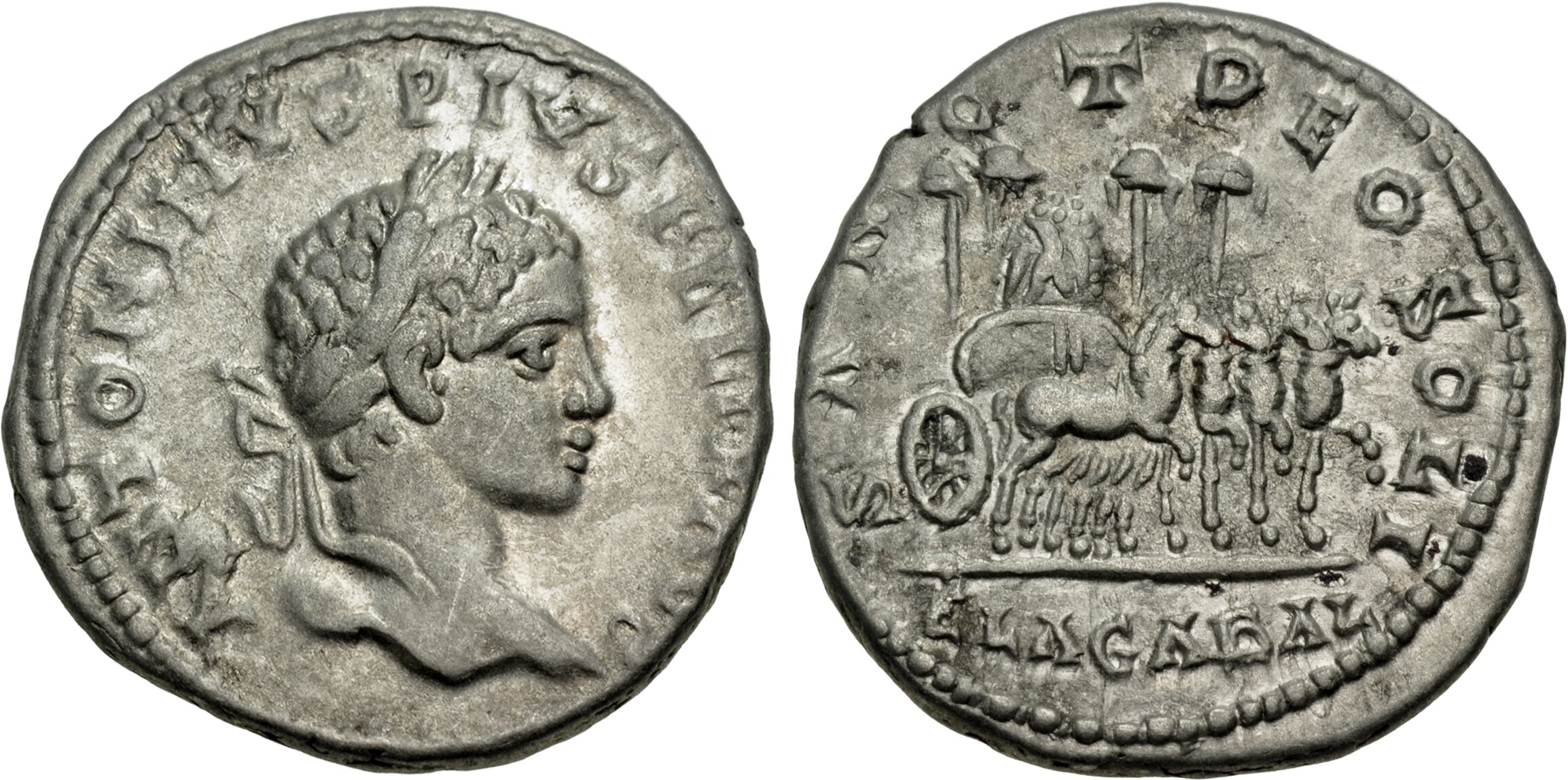 |
