

Our partner for world banknotes research

| Classical Numismatic Group > Electronic Auction 614 | Auction date: 29 July 2026 |
| Lot number: 584 Price realized: 325 USD (Approx. 285 EUR) Note: Prices do not include buyer's fees. | |
| Lot description: ARABIA, Bostra. Marcus Aurelius. AD 161-180. Æ (16.5mm, 2.86 g, 12h). Laureate head right / Camel standing right. Kindler, Bostra 14; Spijkerman –; RPC IV.3 Online 6729; Rosenberger –; Sofaer 21. Earthen red-brown patina, edge flaws. Good VF. Very rare, three recorded in RPC, one in CoinArchives. Estimate: 100 USD |  |

Match 1:
| Classical Numismatic Group > Auction 133 Online Sessions | Auction date: 23 September 2026 |
| Lot number: 5875 Price realized: 70 USD (Approx. 61 EUR) Note: Prices do not include buyer's fees. | |
| Lot description: ARABIA, Bostra(?). Marcus Aurelius. AD 161-180. Æ Quadrans (17mm, 2.49 g, 6h). Laureate head right / Laureate head of Zeus-Ammon right. Asolati 182; RPC IV.3 Online 7143; Sydenham, Caesarea 349. Brown surfaces. Near VF. Rare. From a UK Collection. RIC and Sydenham attributed this small series to Caesarea but admits "Bronze coins with Latin legends are most unusual at Caesarea; but a somewhat similar issue occurs under Hadrian." (RIC III, p. 313). The Legion III Cyrenaica was stationed in Bostra and specimens of this type have been found there, thus the reattribution to that city. Additionally, coins with both Latin and Greek inscriptions are common at Bostra, indicating one set of coins were intended for the local population and one for the legion. The reattribution to Bostra is not certain but the evidence seems to point to an Arabian origin more than Cappadocian. For what it's worth, the Hadrian coin mentioned by RIC has been reattributed to Cyrene, the other likely candidate for this series. Estimate: 100 USD | 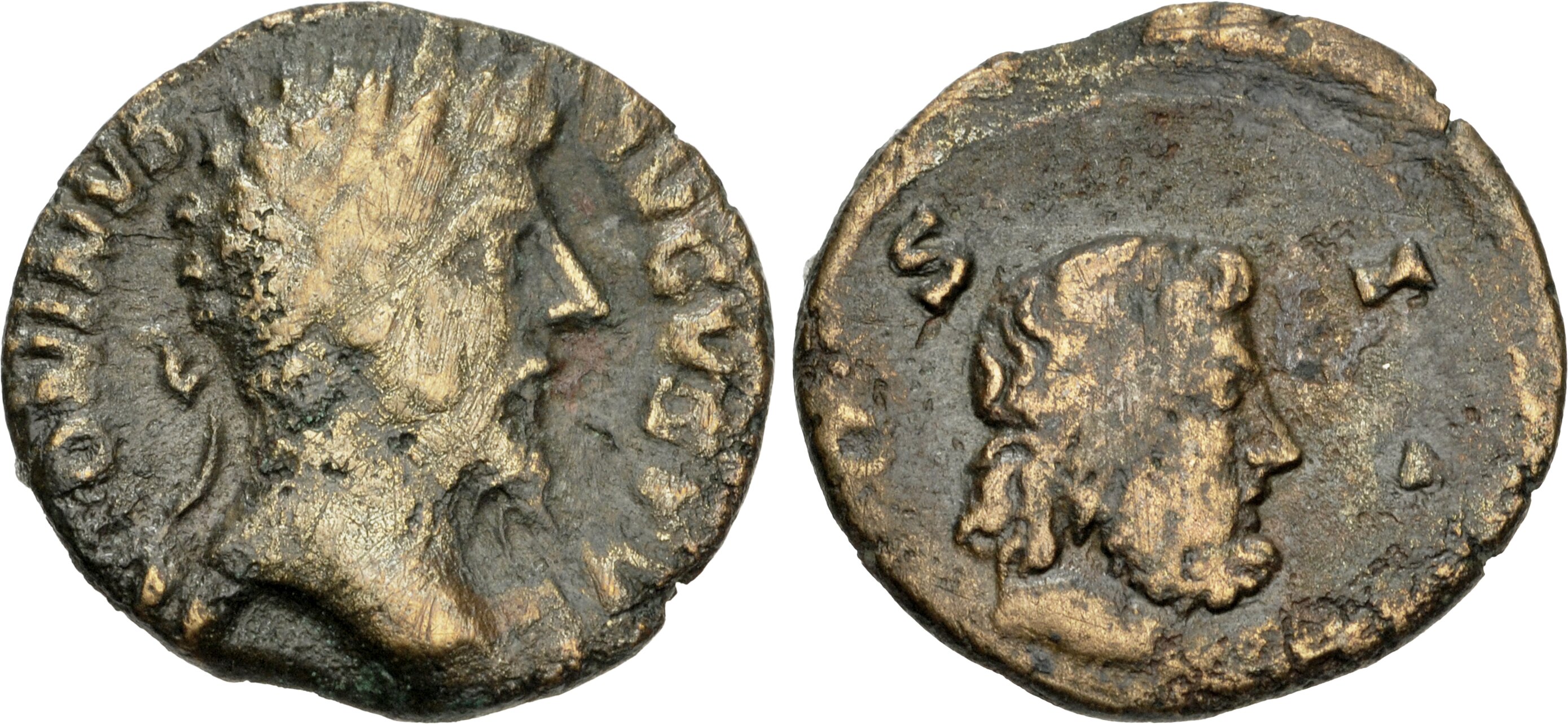 |
Match 2:
| Classical Numismatic Group > Electronic Auction 608 | Auction date: 29 April 2026 |
| Lot number: 551 Price realized: 80 USD (Approx. 68 EUR) Note: Prices do not include buyer's fees. | |
| Lot description: DECAPOLIS, Antiochia ad Hippum. Marcus Aurelius. AD 161-180. Æ (23.5mm, 10.38 g, 12h). Struck under Marcus Aurelius and Lucius Verus, co-emperors, AD 161-169. Laureate bust right, slight drapery on left shoulder / Tyche, standing facing, turreted head left, holding horse by its bridle and cornucopia. Spijkerman 9; RPC IV.3 Online 6567; Rosenberger 9 var. (legends); Sofaer 13; Dow, ACTTB, p. 48 (this coin). Green patina with earthen highlights, slight roughness. Near VF. From the Joseph A. Dow Collection. Ex Classical Numismatic Group Electronic Auction 198 (5 November 2008), lot 198. The present coin is published in Joseph A. Dow, Ancient Coins Through the Bible (Mustang, OK: Tate, 2011), in the chapter From Joshua to Solomon. CNG is pleased to offer coins from the collection of the author here, and in subsequent electronic auctions. Estimate: 100 USD |  |
Match 3:
| Classical Numismatic Group > Electronic Auction 610 | Auction date: 3 June 2026 |
| Lot number: 719 Price realized: 350 USD (Approx. 301 EUR) Note: Prices do not include buyer's fees. | |
| Lot description: DECAPOLIS, Abila. Marcus Aurelius. AD 161-180. Æ (25.5mm, 15.65 g, 12h). Dated CY 225 (AD 161/2). Laureate and cuirassed bust right, seen from the front / Herakles, holding club set on ground, seated left on rock; ЄKC (date) in exergue. Spijkerman 3 var. (dated year 226); RPC IV.3 Online 8369; Rosenberger –; Sofaer 3. Earthen brown patina, reverse scratches. Good VF. Estimate: 150 USD |  |
Match 4:
| Classical Numismatic Group > Electronic Auction 611 | Auction date: 17 June 2026 |
| Lot number: 655 Price realized: 375 USD (Approx. 324 EUR) Note: Prices do not include buyer's fees. | |
| Lot description: DECAPOLIS, Abila. Marcus Aurelius. AD 161-180. Æ (30.5mm, 19.20 g, 12h). Dated CY 226 (AD 162/3). Laureate and cuirassed bust right, slight drapery on shoulder / Statue of Tyche, turreted, standing right, holding long scepter and uncertain object, crowned by Nike on right and rests foot on river-god Heiromax, two small figures on columns on either side; all within distyle shrine with domed roof; ЄKC (date) in exergue. Spijkerman 1; RPC IV.3 Online 6504; Rosenberger 1; Sofaer 142. Dark and light green patina, roughness, smoothing. VF. Estimate: 150 USD |  |
Match 5:
| Classical Numismatic Group > Auction 132 | Auction date: 18 May 2026 |
| Lot number: 598 Price realized: 1,100 USD (Approx. 945 EUR) Note: Prices do not include buyer's fees. | |
| Lot description: TROAS, Ilium. Marcus Aurelius. AD 161-180. Æ Sestertius (32mm, 26.38 g, 12h). Struck under Marcus Aurelius and Lucius Verus, co-emperors, circa AD 161-161. Laureate, draped, and cuirassed bust right, seen from behind / EKTΩP, Hector standing in galloping biga left, brandishing shield and spear, about to hurl a stone in his raised right hand. Bellinger T147(1); RPC IV.2 Online 84; von Fritze, Ilion 59. Green patina, light roughness, scratches, edge bump. VF. Extremely rare, only three recorded in RPC, this coin is the only specimen in private hands. From the Dr. Mark Staal Collection. Ex Gadoury (1 December 2012), lot 257. For nine years in the Trojan War, the fortunes of both sides ebbed and flowed. During the tenth year, Achilles, upset over the loss of the woman Chryseis to Agamemnon, the commander of the Greeks, withdrew to his tent and refused to fight. The loss of the greatest of the Greek warriors allowed the Trojans under the command of Hector, the eldest son of Priam, to gain the upper hand. At that point, Patroclus then offered to put on Achilles' armor in order to rouse the Greeks to fight. Thinking that Achilles had returned to battle, Hector dashed out on to the field of battle in his chariot (Hom. Il. 16. 367-369): Ἕκτορα δ᾽ ἵπποι // ἔκφερον ὠκύποδες σὺν τεύχεσι, λεῖπε δὲ λαὸν // Τρωϊκόν, οὓς ἀέκοντας ὀρυκτὴ τάφρος ἔρυκε. ("But the swift-footed horses did carry forth Hektor with his equipage, and he left behind the Trojan host, whom unwilling the excavated trench held back.") Hector killed the clearly ill-matched Patroclus, and, in order to avenge his friend, Achilles returned to the field to slay Hector. Estimate: 750 USD |  |
