

Our partner for world banknotes research

| Classical Numismatic Group > Electronic Auction 613 | Auction date: 15 July 2026 |
| Lot number: 409 Price realized: 140 USD (Approx. 122 EUR) Note: Prices do not include buyer's fees. | |
| Lot description: ARABIA, Southern. Qataban. Unknown ruler(s). Circa 350-320/00 BC. AR gms – Hemidrachm (10.5mm, 1.98 g, 9h). Imitating Athens. Helmeted head of Athena right; Γ (g in South Arabian; mark of value) on cheek / Owl standing right, head facing; olive spray and crescent to left, Royal Qatabanian monogram to lower right; all within incuse square. Van Alfen, Studies, Type QIV.A, unlisted dies; CAF 1.0aii; Huth 350–2. Lightly toned, some find patina. VF. Estimate: 100 USD |  |

Match 1:
| Classical Numismatic Group > Electronic Auction 610 | Auction date: 3 June 2026 |
| Lot number: 517 Price realized: 650 USD (Approx. 558 EUR) Note: Prices do not include buyer's fees. | |
| Lot description: EGYPT, Pharaonic Kingdom. Uncertain pharaoh(s). Late 5th–mid 4th centuries BC. AR Tetradrachm (23.5mm, 17.14 g, 9h). Imitating Athens. Helmeted head of Athena right, with frontal eye / Owl standing right, head facing; olive spray and crescent to left; all within incuse square. Van Alfen, Mechanisms, Group III.A.1, Fig. 1 = Buttrey Type B. Iridescent tone, some hairlines. Good VF. Ex Classical Numismatic Group Electronic Auction 583 (19 March 2025), lot 271; Classical Numismatic Group Electronic Auction 394 (29 March 2017), lot 195. Estimate: 300 USD |  |
Match 2:
| Classical Numismatic Group > Keystone Auction 17 | Auction date: 22 July 2026 |
| Lot number: 49 Price realized: 700 USD (Approx. 614 EUR) Note: Prices do not include buyer's fees. | |
| Lot description: EGYPT, Pharaonic Kingdom. Uncertain pharaoh(s). Late 5th–mid 4th centuries BC. AR Tetradrachm (23.5mm, 17.13 g, 9h). Imitating Athens. Helmeted head of Athena right, with frontal eye / Owl standing right, head facing; olive spray and crescent to left; all within incuse square. Van Alfen, Mechanisms, Group III.A.1, Fig. 1 = Buttrey Type B; Van Alfen, Owls, pl. 8, 2. Attractively toned. Good VF. High relief. From the W. Toliver Besson Collection. Ex Freeman & Sear inventory G7842 (1 April 2008; as an official Athens issue). Estimate: 300 USD |  |
Match 3:
| Classical Numismatic Group > Electronic Auction 608 | Auction date: 29 April 2026 |
| Lot number: 279 Price realized: 375 USD (Approx. 320 EUR) Note: Prices do not include buyer's fees. | |
| Lot description: EGYPT, Pharaonic Kingdom. Uncertain pharaoh(s). Late 5th–mid 4th centuries BC. AR Tetradrachm (21.5mm, 17.00 g, 8h). Imitating Athens. Helmeted head of Athena right, with frontal eye / Owl standing right, head facing; olive spray and crescent to left; all within incuse square. Van Alfen, Mechanisms, Group III.A.1, Fig. 1 = Buttrey Type B. Toned, remnants of find patina, test cuts. Good VF. Estimate: 150 USD | 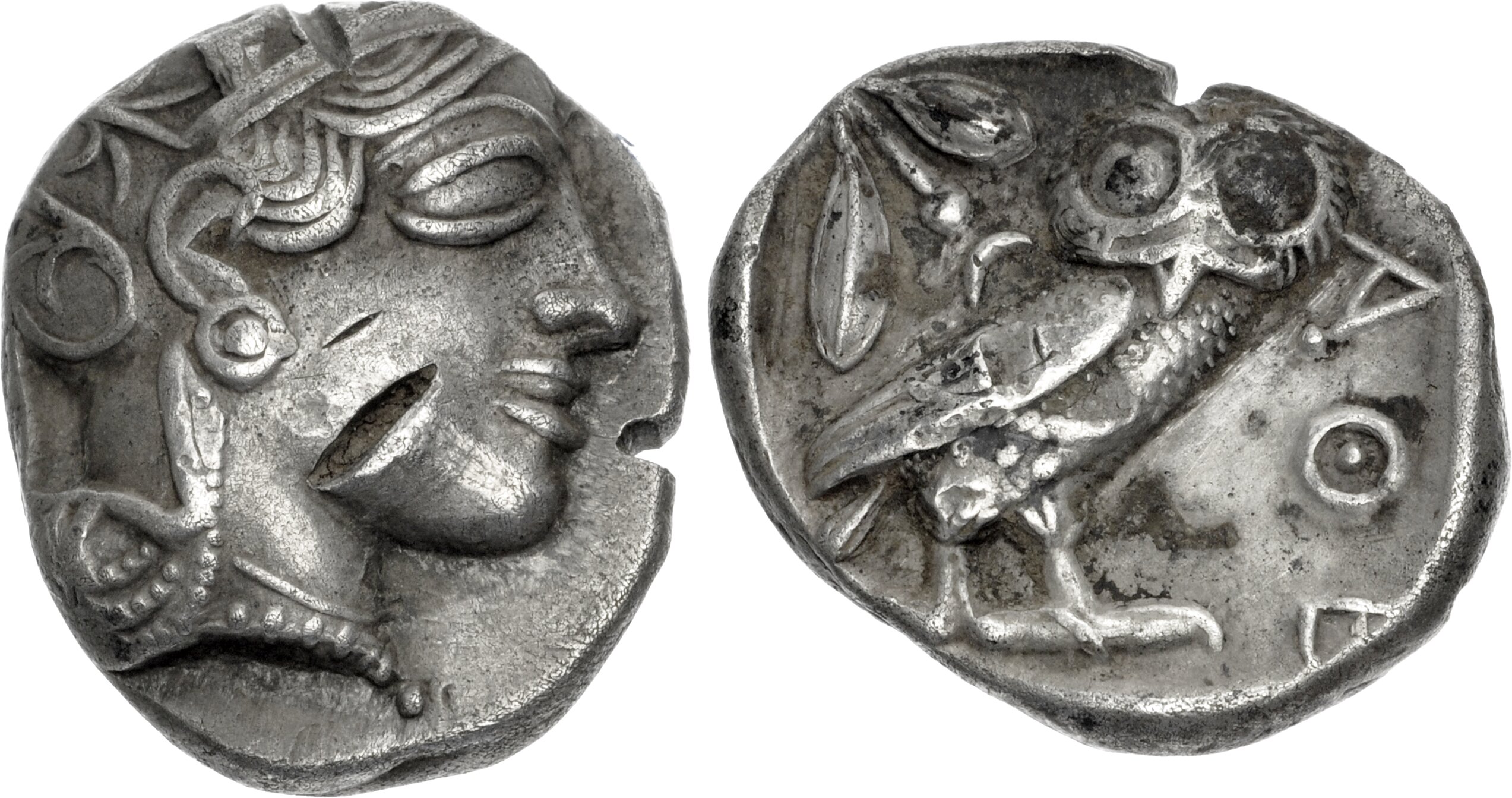 |
Match 4:
| Classical Numismatic Group > Electronic Auction 613 | Auction date: 15 July 2026 |
| Lot number: 419 Price realized: 300 USD (Approx. 262 EUR) Note: Prices do not include buyer's fees. | |
| Lot description: EGYPT, Pharaonic Kingdom. Uncertain pharaoh(s). Late 5th–mid 4th centuries BC. AR Tetradrachm (21.5mm, 16.69 g, 8h). Imitating Athens. Helmeted head of Athena right, with frontal eye; c/m: Aramaic letters within incuse square / Owl standing right, head facing; olive spray and crescent to left; all within incuse square. Van Alfen, Mechanisms, Group III.A.1, Fig. 2 = Buttrey Type M. Horn silver, dig on reverse. Near VF. Estimate: 200 USD | 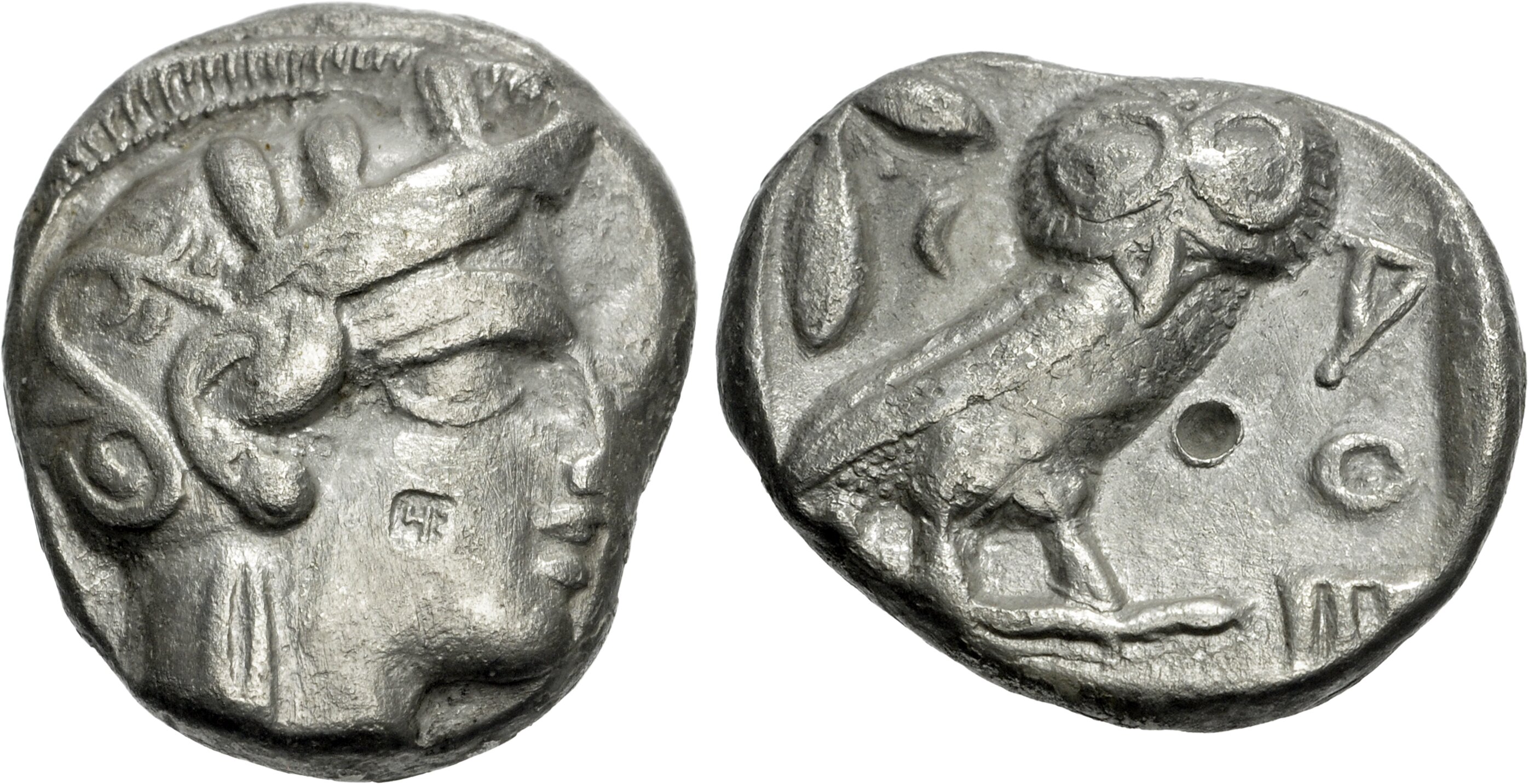 |
Match 5:
| Classical Numismatic Group > Auction 132 | Auction date: 18 May 2026 |
| Lot number: 308 Price realized: 1,300 USD (Approx. 1,117 EUR) Note: Prices do not include buyer's fees. | |
| Lot description: CORINTHIA, Corinth. Circa 350/45-285 BC. AR Stater (20mm, 8.44 g, 12h). Pegasos flying left / Helmeted head of Athena left; Δ-I flanking neck; to right, cow standing left, suckling calf. Ravel Period V, 1074 (same obv. die as illustration); Pegasi 448; BCD Corinth –; HGC 4, 1848. Lightly toned, a few marks. Good VF. Very rare symbol. Only two examples in CoinArchives. From the Thomas Palmer Collection. In terms of population, wealth and political clout, Corinth was the second city in Greece throughout the Classical era, outshone only by Athens. A Mycenaean settlement on the narrow Isthmus of Corinth, it was seized by the Dorian Greeks in circa 900 BC and by the fifth century BC the city boasted two fine harbors, a host of imposing public buildings, and a population of about 100,000. Corinth's military innovations included the trireme, a warship powered by three banks of oarsmen, and a popular style of enclosed bronze helmet ("Corinthian") that became ubiquitous throughout Greece. Corinth's colonies abounded in Greece proper and Magna Graecia, chief among them Syracuse, Korkyra, Ambrakia, and Apollonia. From the late sixth century BC, Corinth's coinage featured the winged horse Pegasos and a fine head of Athena wearing a Corinthian helmet. In mythology, Pegasos was captured and tamed by the hero Bellerophon, who went on to become king of Corinth. Corinthian "pegasi" staters were struck in enormous numbers both in the mother city and its colonies, rivaling the Athenian "owl" as an international trade coin. Estimate: 750 USD |  |
