

Our partner for world banknotes research

| Naville Numismatics Ltd. > Auction 102 | Auction date: 5 July 2026 |
| Lot number: 232 Price realized: 300 GBP (Approx. 401 USD / 351 EUR) Note: Prices do not include buyer's fees. | |
| Lot description: Arabia, Southern Saba' Tetradrachm circa 420-404, AR 26.00 mm., 17.10 g. Head of Athena r., wearing crested Attic helmet; uncertain symbol within countermark. Rev. AΘE Owl standing r. with folded wings, head facing; olive sprig and crescent in upper l. field; in r. field, uncertain symbol and pellet with circle within two countermarks. All within incuse square. Svoronos pl. 108. SNG Copenhagen 31. Old cabinet tone and very fine Ex CNG 66, 2004, 73; CNG Mail bid 78, 2008, 619 and NAC February 2026, 483 sales. Countermarked in Orient Starting price: 150 GBP |  |
Match 1:
| Naville Numismatics Ltd. > Auction 103 | Auction date: 9 August 2026 |
| Lot number: 319 Price realized: 340 GBP (Approx. 459 USD / 397 EUR) Note: Prices do not include buyer's fees. | |
| Lot description: Arabia, Southern Saba' Tetradrachm circa 460-440, AR 25.00 mm., 17.08 g. Head of Athena r., wearing crested Attic helmet. Rev. AΘE Owl standing r. with folded wings, head facing; olive sprig and crescent in upper l. field; in r. field, uncertain symbol within counter mark. All within incuse square. Svoronos pl. 108. SNG Copenhagen 31. Light iridescent tone and very fine Ex Freeman & Sear 14, 2007, 217; CNG Mail Bid 78, 2008, 618 and NAC February 2026, 482 sales. Countermarked in Orient Starting price: 150 GBP | 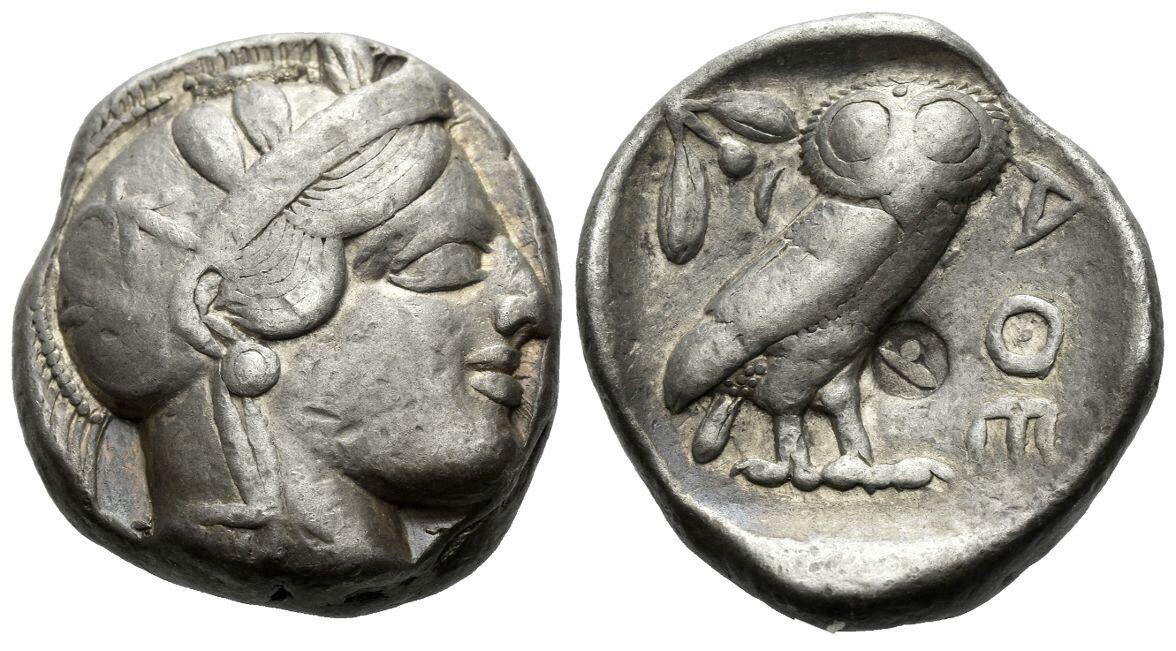 |
Match 2:
| Naville Numismatics Ltd. > Auction 101 | Auction date: 26 April 2026 |
| Lot number: 154 Price realized: 500 GBP (Approx. 675 USD / 577 EUR) Note: Prices do not include buyer's fees. | |
| Lot description: Attica, Athens Tetradrachm After 449, AR 24.00 mm., 17.14 g. Head of Athena r., wearing crested Attic helmet. Rev. AΘE Owl standing r. with folded wings, head facing; olive sprig and crescent in upper l. field; all within incuse square. Kroll 8. SNG Copenhagen 31. Lovely old cabinet tone and Extremely fine Starting price: 120 GBP |  |
Match 3:
| Naville Numismatics Ltd. > Auction 103 | Auction date: 9 August 2026 |
| Lot number: 282 Price realized: 420 GBP (Approx. 566 USD / 490 EUR) Note: Prices do not include buyer's fees. | |
| Lot description: Attica, Athens Tetradrachm After 449, AR 23.00 mm., 17.19 g. Head of Athena r., wearing crested Attic helmet ornamented with three olive leaves above visor and spiral palmette on bowl, round earring with central boss, and pearl necklace. Rev. Owl standing r. with head facing, olive sprig and crescent behind; all within incuse square. Kroll 8. Dewing 1591. SNG Copenhagen 31. Toned and Good Very Fine. Starting price: 120 GBP | 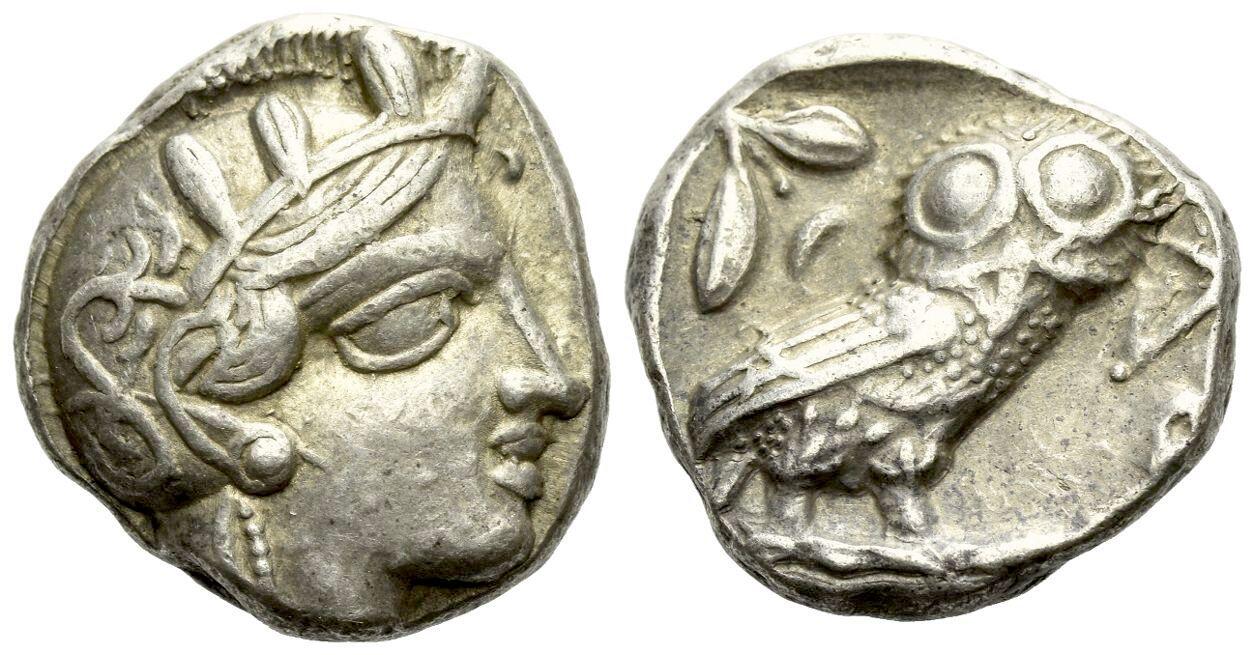 |
Match 4:
| Naville Numismatics Ltd. > Auction 101 | Auction date: 26 April 2026 |
| Lot number: 153 Price realized: 200 GBP (Approx. 270 USD / 231 EUR) Note: Prices do not include buyer's fees. | |
| Lot description: Attica, Athens Tetradrachm circa 450-420, AR 24.00 mm., 17.06 g. Head of Athena r., wearing Attic helmet decorated with wreath and palmettae. Rev. Owl standing r.; behind, olive sprig and crescent. All within incuse square. Svoronos pl. 13. Dewing 1598. Very fine Starting price: 200 GBP | 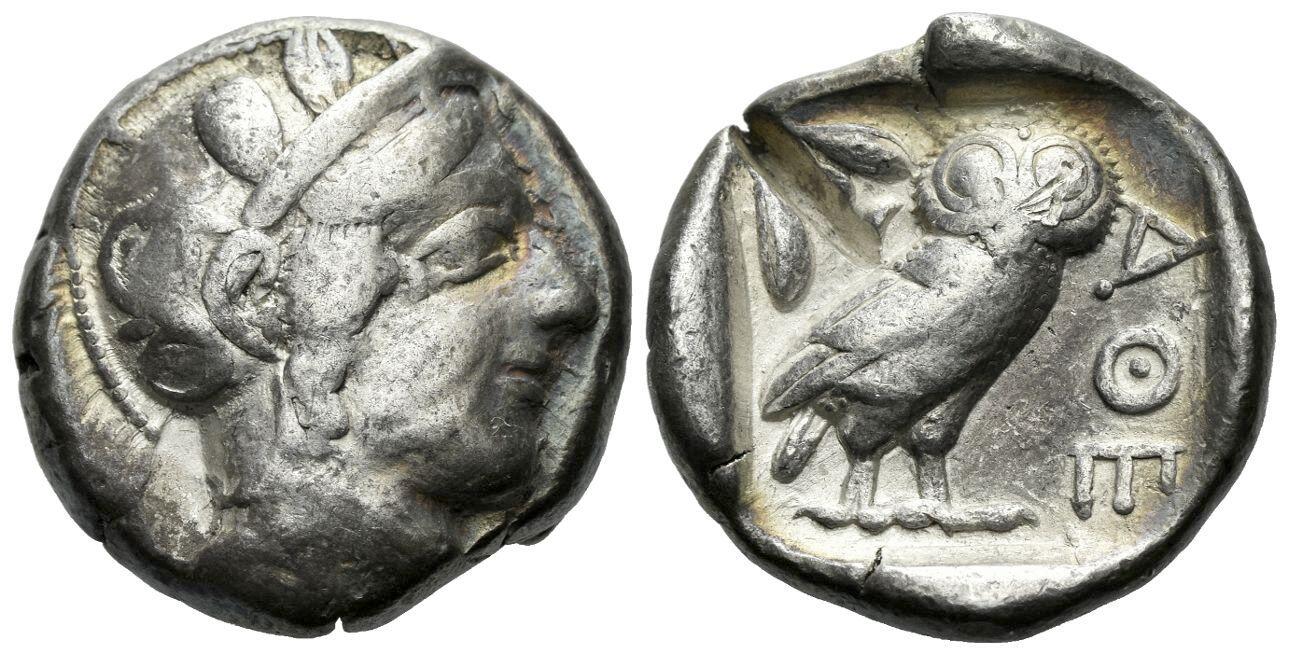 |
Match 5:
| Numismatica Ars Classica > Auction 165 | Auction date: 26 May 2026 |
| Lot number: 281 Price realized: 22,000 CHF (Approx. 27,887 USD / 24,055 EUR) Note: Prices do not include buyer's fees. | |
| Lot description: Athens Tetradrachm, Civic mint circa 510-500/490, AR 26 mm, 17.24 g. Tetradrachm, Civic mint circa 510-500/490, AR 17.09 g. Head of Athena r., wearing crested Attic helmet and disc earring. Rev. AΘΕ Owl standing r. with closed wings, head facing; in upper l. field, olive-twig. All within incuse square. Gillet 937. Svoronos pl. 6, 18-19. BMC 20-21. Seltman 303, A 197 (this obverse die). Very rare and in unusually fine condition for the issue. A portrait of masterly Archaic style struck in high relief, a light scratch on cheek and minor marks, otherwise about extremely fine The introduction of the Athenian "owl" tetradrachm in the late sixth century BC and its establishment of its types as the unchanging emblems of Athens in the early fifth century BC marked an historical watershed. Thanks to the production of the "owls" from silver mined locally at Laurion in Attica, Athens was able to finance the construction of the fleet that permitted the evacuation of the city when the Persians advanced into Greece and brought the Athenians victory at the battle of Salamis in 480 BC. The coins also helped pay for the reconstruction of Athens once the Persians departed. Without the "owls" it is far from clear that Athens would have survived the calamity so well. Once Athens was back on its feet, the owls became a tool for bringing the Greek war of revenge to the Persian Empire by financing the development of both the fleet and the Athenian-led Delian League. Through the league membership, Athens established a great naval empire in the Aegean. By 447 BC all members were required to use Athenian coinage, which spread the owls even further afield. Through interactions with Athens and its allies as well as with Greek mercenaries desirous of payment in coin that was recognised just about everywhere in their homeland, the Athenian tetradrachm became familiar (and was frequently imitated) even in territories of Persian satraps and among the peoples of the ancient Near East. By the time Alexander the Great began the conquest of the Persian Empire in 336 BC and was considering an imperial coinage policy of his own, the Athenian owl had been an international currency for more than a century. It was truly one of the great success stories of ancient Greek coinage. Estimate: 15000 CHF |  |

