

Our partner for world banknotes research

| Numimarket.pl > E-Auction 11 | Auction date: 12 April 2026 |
| Lot number: 63 Price realized: 181 EUR (Approx. 212 USD) Note: Prices do not include buyer's fees. | |
| Lot description: Phoenicia, Arados, Ba'al Arwad 348-339 BC, Stater, Scarce Weight 10,44 g, 19 mm. Waga 10,44 g, 19 mm. Przyjemna, duża, gruba moneta z ładną patyną. Awers: głowa władcy w wieńcu laurowym prawo. Rewers: galera na falach, znaki fenickie. Fenicja była w II-I tys. p.n.e. jedną z najważniejszych krain Bliskiego Wschodu. Położona na wybrzeżu współczesnego Libanu i Syrii, słynęła ze swojej floty, handlu morskiego oraz z bogactwa. Fenicja nie była jednolitym królestwem, lecz grupą państw-miast luźno ze sobą współpracujących. Jednym z takich miast było Arados. Inne miasto Fenicji: Tyr, w 814 r. p.n.e. wysłało do Afryki Północnej kolonizatorów, którzy założyli Kartaginę. Fenicję często podbijały starożytne mocarstwa, w VI w. p.n.e. podbili ją Persowie. Oferowany stater pochodzi właśnie z okresu perskiego w historii Fenicji. Fenicję wielokrotnie wymieniano w Starym Testamencie, m.in. w księdze Amosa (Am 9-10): 'Przeciwko Tyrowi i Fenicji. 9 Tak mówi Pan: Z powodu trzech występków Tyru i z powodu czterech nie odwrócę tego [wyroku], gdyż wydali oni Edomowi uprowadzonych aż do ostatniego i nie pamiętali o bratnim przymierzu. 10 Ześlę więc ogień na mury Tyru i strawi jego pałace.'Reference: BMC 58 Grade: VF Starting price: 120 EUR |  |
Match 1:
| Numimarket.pl > E-Auction 11 | Auction date: 12 April 2026 |
| Lot number: 64 Price realized: 157 EUR (Approx. 184 USD) Note: Prices do not include buyer's fees. | |
| Lot description: Phoenicia, Arados, Ba'al Arwad 348-339 BC, Stater, Scarce Weight 10,88 g, 19 mm. Waga 10,88 g, 19 mm. Przyjemna, duża, gruba moneta z ładną patyną. Awers: głowa władcy w wieńcu laurowym prawo. Rewers: galera na falach, znaki fenickie. Fenicja była w II-I tys. p.n.e. jedną z najważniejszych krain Bliskiego Wschodu. Położona na wybrzeżu współczesnego Libanu i Syrii, słynęła ze swojej floty i handlu morskiego oraz z bogactwa. Fenicja nie była jednolitym królestwem, lecz grupą państw-miast luźno ze sobą współpracujących. Jednym z takich miast było Arados. Inne miasto Fenicji: Tyr, wysłało do Afryki Północnej kolonizatorów, którzy w 814 r. p.n.e. założyli Kartaginę. Fenicję często podbijały starożytne mocarstwa, w VI w. p.n.e. podbili ją Persowie. Oferowany stater pochodzi właśnie z okresu perskiego w historii Fenicji. Fenicję wielokrotnie wymieniano w Starym Testamencie, m.in. w księdze Amosa (Am 9-10): Przeciwko Tyrowi i Fenicji. 9 Tak mówi Pan: Z powodu trzech występków Tyru i z powodu czterech nie odwrócę tego [wyroku], gdyż wydali oni Edomowi uprowadzonych aż do ostatniego i nie pamiętali o bratnim przymierzu. 10 Ześlę więc ogień na mury Tyru i strawi jego pałace.Reference: BMC 58 Grade: VF Starting price: 96 EUR |  |
Match 2:
| Wojcicki Polish Auction House > Premium Auction 18 | Auction date: 26 September 2026 |
| Lot number: 14292 Price realized: 73 EUR (Approx. 83 USD) Note: Prices do not include buyer's fees. | |
| Lot description: Roman Imperial, Tiberius, Denarius - Tribute Penny One of the most recognisable denarii of the Roman Empire, issued at Lugdunum during the reign of Tiberius. The type is widely known in numismatic literature and on the collecting market as the "Tribute Penny." The obverse depicts Tiberius as son of the deified Augustus – DIVI AVG F, clearly emphasising the dynastic continuity of the new Principate. Tiberius, who succeeded Augustus after his death in AD 14, presented his reign as a continuation of the political order established by his predecessor. The reverse depicts a seated female figure, generally interpreted as Pax and traditionally also identified as Livia, the mother of Tiberius. The legend PONTIF MAXIM refers to the office of Pontifex Maximus, the highest priesthood of Roman state religion. The type owes much of its fame, however, to its traditional association with the Biblical "Tribute Penny." The denarius of Tiberius is most frequently suggested as a possible coin corresponding to the denarius mentioned in the Gospel account of the question concerning the payment of taxes to Caesar. It cannot, however, be proven that this specific type was the coin referred to in the Biblical text. Regardless of this identification, the present denarius remains one of the most iconic coins of the early Roman Empire, combining the history of the Julio-Claudian dynasty with one of the best-known passages of the New Testament. Glued. Roman Imperial Tiberius (14-37), Denarius 14-37, Lugdunum mint (Lyon) Obverse: laureate head right TI CAESAR DIVI AVG F AVGVSTVS Reverse: Livia (as Pax) seated right on a chair with ornamented legs, holding a long inverted spear with her right hand and an olive branch in her left PONTIF MAXIM Diameter 19 mm, weight 3.44 g Jeden z najbardziej rozpoznawalnych denarów Cesarstwa Rzymskiego, emitowany w Lugdunum za panowania Tyberiusza. Typ ten jest powszechnie określany w literaturze i na rynku numizmatycznym jako „Tribute Penny". Awers przedstawia Tyberiusza jako syna ubóstwionego Augusta, DIVI AVG F, wyraźnie podkreślając dynastyczną ciągłość nowego pryncypatu. Tyberiusz, który objął władzę po śmierci Augusta w 14 roku n.e., przedstawiał swoje panowanie jako kontynuację stworzonego przez poprzednika porządku. Na rewersie znajduje się siedząca kobieca postać, najczęściej interpretowana jako Pax, a tradycyjnie utożsamiana również z Liwią, matką Tyberiusza. Legenda PONTIF MAXIM odnosi się do godności Pontifex Maximus, najwyższego kapłana rzymskiej religii państwowej. Największą sławę typ zawdzięcza jednak jego tradycyjnemu powiązaniu z biblijnym „groszem czynszowym". Denar Tyberiusza jest najczęściej wskazywany jako możliwa moneta odpowiadająca denarowi wspomnianemu w ewangelicznej scenie pytania o płacenie podatku Cezarowi. Nie można jednak udowodnić, że chodziło właśnie o ten konkretny typ. Niezależnie od tej identyfikacji prezentowany denar pozostaje jedną z najbardziej ikonicznych monet wczesnego Cesarstwa, łącząc historię dynastii julijsko-klaudyjskiej z jednym z najbardziej znanych przekazów Nowego Testamentu. Moneta klejona. Cesarstwo Rzymskie Tyberiusz (14-37), Denar 14-37, mennica Lugdunum (Lyon) Awers: głowa w wieńcu laurowym w prawo TI CAESAR DIVI AVG F AVGVSTVS Rewers: Liwia (jako Pax) siedząca na tronie w prawo, trzymająca włócznię i gałązkę oliwną PONTIF MAXIM Średnica 19 mm, waga 3.44 g Reference: RIC 30 Grade: F Roman Imperial Tiberius Denarius Starting price: 24 EUR | 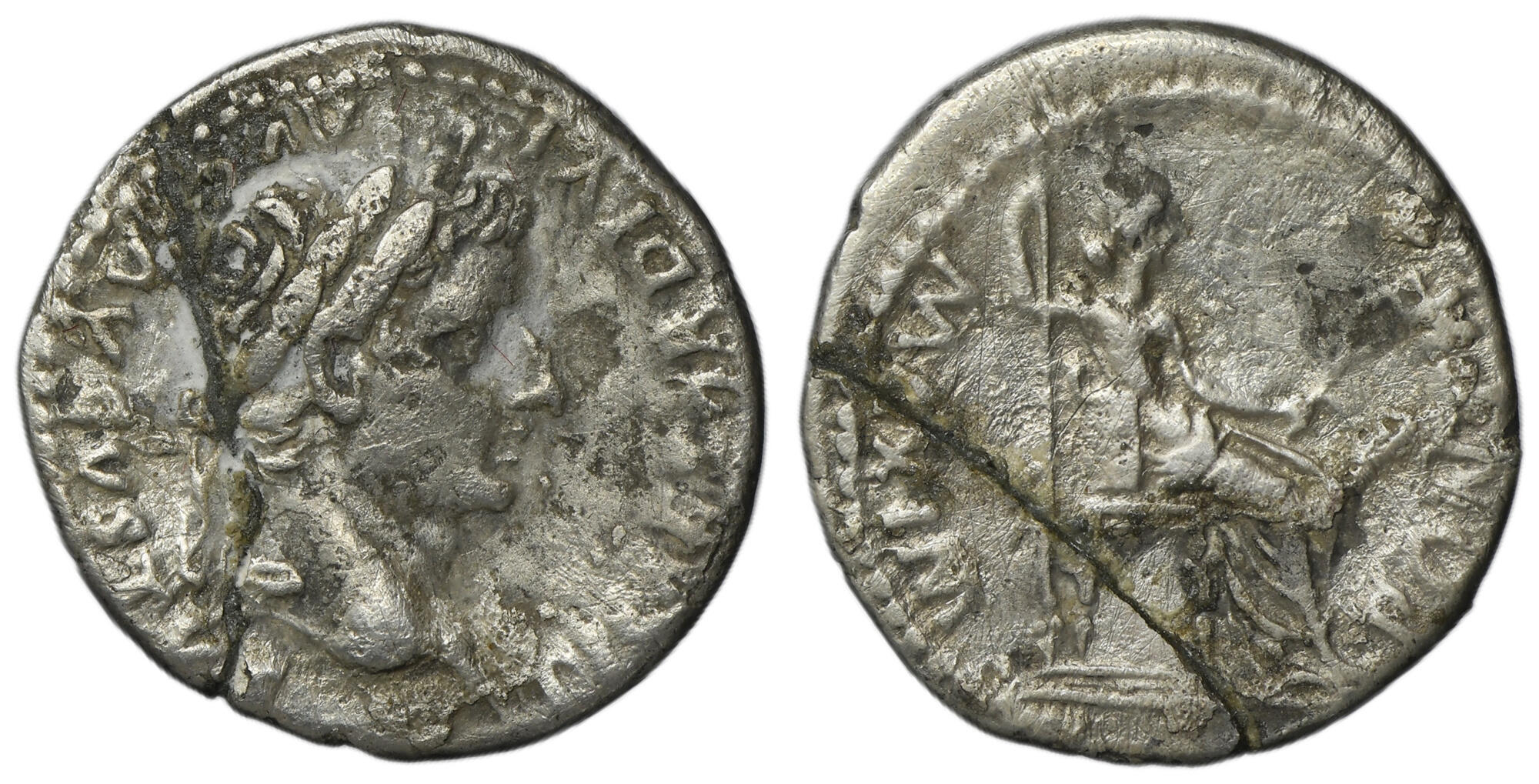 |
Match 3:
| Numimarket.pl > E-Auction 11 | Auction date: 12 April 2026 |
| Lot number: 68 Price realized: 106 EUR (Approx. 124 USD) Note: Prices do not include buyer's fees. | |
| Lot description: Greece, Fenicja, Alexander III the Great, 336-323 BC, Drachm, Arados Weight 4,24 g, 16 mm. Rare, early Arados drachm, struck under Menes or Laomedon, c. 324-320 BC. Waga 4,24 g, 16 mm. Rzadka, wczesna emisja z Arados, bita w latach 324-320 jeszcze za życia Aleksandra Wielkiego lub krótko po jego śmierci za Filipa III Arridajosa, pod rządami Menesa lub Laomedona. Ładna prezencja. Awers: głowa młodego Heraklesa w skalpie lwa skierowana w prawo. Rewers: Zeus z długim berłem i orłem na wyciągniętej prawicy siedzący na tronie, przed nim, w polu po lewej oznaczenie w formie greckiej litery Σ , pod tronem monogram AP, pod tronującym Zeusem oraz w prawym polu legenda BAΣIΛEΩΣ - ΑΛΕΞΑΝΔΡΟΥ.Reference: Price 3317 Grade: XF- Starting price: 48 EUR |  |
Match 4:
| Wojcicki Polish Auction House > Premium Auction 18 | Auction date: 26 September 2026 |
| Lot number: 14290 Price realized: 141 EUR (Approx. 161 USD) Note: Prices do not include buyer's fees. | |
| Lot description: Roman Imperial, Tiberius, Denarius - Tribute Penny One of the most recognisable denarii of the Roman Empire, issued at Lugdunum during the reign of Tiberius. The type is widely known in numismatic literature and on the collecting market as the "Tribute Penny." The obverse depicts Tiberius as son of the deified Augustus – DIVI AVG F, clearly emphasising the dynastic continuity of the new Principate. Tiberius, who succeeded Augustus after his death in AD 14, presented his reign as a continuation of the political order established by his predecessor. The reverse depicts a seated female figure, generally interpreted as Pax and traditionally also identified as Livia, the mother of Tiberius. The legend PONTIF MAXIM refers to the office of Pontifex Maximus, the highest priesthood of Roman state religion. The type owes much of its fame, however, to its traditional association with the Biblical "Tribute Penny." The denarius of Tiberius is most frequently suggested as a possible coin corresponding to the denarius mentioned in the Gospel account of the question concerning the payment of taxes to Caesar. It cannot, however, be proven that this specific type was the coin referred to in the Biblical text. Regardless of this identification, the present denarius remains one of the most iconic coins of the early Roman Empire, combining the history of the Julio-Claudian dynasty with one of the best-known passages of the New Testament. Roman Imperial Tiberius (14-37), Denarius 14-37, Lugdunum mint (Lyon) Obverse: laureate head right TI CAESAR DIVI AVG F AVGVSTVS Reverse: Livia (as Pax) seated right on a chair with ornamented legs, holding a long inverted spear with her right hand and an olive branch in her left PONTIF MAXIM Diameter 19 mm, weight 3.44 g Jeden z najbardziej rozpoznawalnych denarów Cesarstwa Rzymskiego, emitowany w Lugdunum za panowania Tyberiusza. Typ ten jest powszechnie określany w literaturze i na rynku numizmatycznym jako „Tribute Penny". Awers przedstawia Tyberiusza jako syna ubóstwionego Augusta, DIVI AVG F, wyraźnie podkreślając dynastyczną ciągłość nowego pryncypatu. Tyberiusz, który objął władzę po śmierci Augusta w 14 roku n.e., przedstawiał swoje panowanie jako kontynuację stworzonego przez poprzednika porządku. Na rewersie znajduje się siedząca kobieca postać, najczęściej interpretowana jako Pax, a tradycyjnie utożsamiana również z Liwią, matką Tyberiusza. Legenda PONTIF MAXIM odnosi się do godności Pontifex Maximus, najwyższego kapłana rzymskiej religii państwowej. Największą sławę typ zawdzięcza jednak jego tradycyjnemu powiązaniu z biblijnym „groszem czynszowym". Denar Tyberiusza jest najczęściej wskazywany jako możliwa moneta odpowiadająca denarowi wspomnianemu w ewangelicznej scenie pytania o płacenie podatku Cezarowi. Nie można jednak udowodnić, że chodziło właśnie o ten konkretny typ. Niezależnie od tej identyfikacji prezentowany denar pozostaje jedną z najbardziej ikonicznych monet wczesnego Cesarstwa, łącząc historię dynastii julijsko-klaudyjskiej z jednym z najbardziej znanych przekazów Nowego Testamentu. Cesarstwo Rzymskie Tyberiusz (14-37), Denar 14-37, mennica Lugdunum (Lyon) Awers: głowa w wieńcu laurowym w prawo TI CAESAR DIVI AVG F AVGVSTVS Rewers: Liwia (jako Pax) siedząca na tronie w prawo, trzymająca włócznię i gałązkę oliwną PONTIF MAXIM Średnica 19 mm, waga 3.44 g Reference: RIC 30 Grade: F+/VF- Roman Imperial Tiberius Denarius Starting price: 36 EUR | 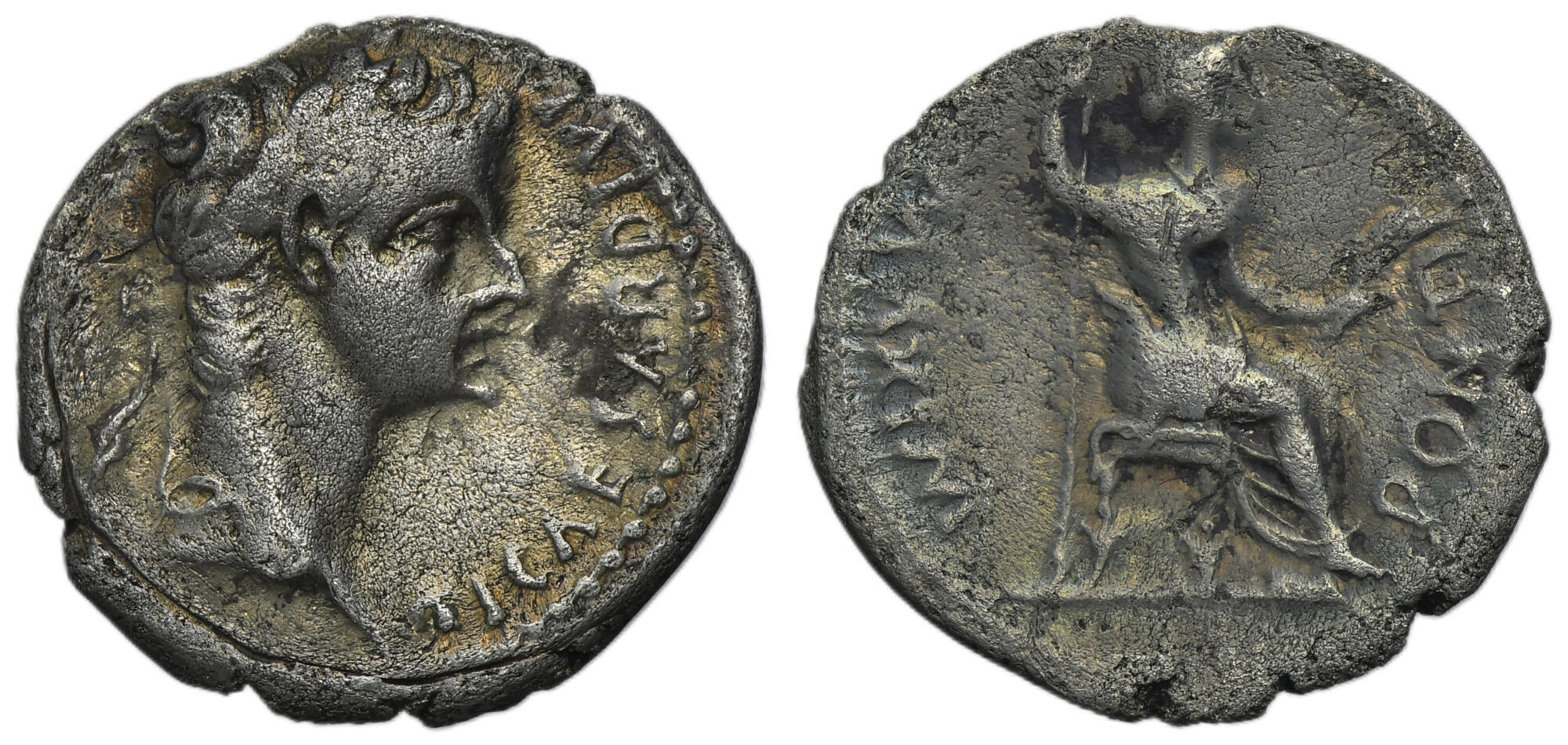 |
Match 5:
| Wojcicki Polish Auction House > Premium Auction 18 | Auction date: 26 September 2026 |
| Lot number: 14234 Price realized: 398 EUR (Approx. 454 USD) Note: Prices do not include buyer's fees. | |
| Lot description: Roman Republic, Marcus Antonius and Julius Caesar, Denarius A highly interesting and exceptionally evocative propaganda issue, struck at one of the most turbulent moments in the final decades of the Roman Republic. The denarius was minted in 43 BC, only a little over a year after the assassination of Julius Caesar on the Ides of March in 44 BC, when his political legacy had become the object of rivalry among the most powerful figures in the Roman world. Following Caesar's death, one of the principal contenders for his political inheritance was Mark Antony, consul in 44 BC and one of the dictator's closest associates. His position, however, was increasingly challenged by the young Gaius Octavius, adopted in Caesar's will and presenting himself as his legal son and heir. Invoking the memory of the murdered dictator thus became one of the most important instruments of political legitimisation. The year 43 BC brought a dramatic escalation of the conflict. Following the battles of Forum Gallorum and Mutina, Antony found himself in a difficult position, but subsequently joined forces with Marcus Aemilius Lepidus. In the autumn, Antony, Octavian and Lepidus reached an agreement. The Second Triumvirate established by the three men was not merely a private political alliance – it was formally sanctioned by law and endowed with extraordinary powers to reorganise the state. It is precisely this new political reality that is reflected in the abbreviation R·P·C – rei publicae constituendae appearing on the obverse, forming part of the titulature of the triumvirs and referring to their mandate for the "reconstitution" or "reorganisation of the Republic". The presence of this titulature distinguishes Crawford 488/2 from the earlier Crawford 488/1 variety, on which Antony appears without R·P·C. Crawford associated the second variety with the period following the agreement between the triumvirs in November 43 BC. Particularly fascinating is the iconography of the two sides of the denarius. Antony placed his own portrait on one side and that of the murdered Caesar on the other. This constituted an unmistakable political statement: Antony presented himself as a man enjoying a special relationship with the dictator and his legacy. At a time when Octavian was building his position primarily upon his adoption and the name of Caesar, Antony emphasised his own long-standing association with Caesar and the offices and honours that connected them. The priestly attributes accompanying the portraits are equally significant. The lituus behind Antony's head and the vessel beside Caesar's portrait refer to religious offices held by the two statesmen. In Roman political culture, priestly offices formed an integral part of the public status of members of the elite, and these symbols therefore further emphasised the bond between Antony and Caesar. Also worthy of attention is Mark Antony's facial stubble. In numismatic interpretation, it has been associated with a public manifestation of mourning for Caesar. A similar convention was employed by Octavian during this period, before Caesar's assassins were defeated at Philippi in 42 BC. The present denarius therefore belongs to a group of issues in which coinage became a direct instrument of political propaganda. Facing one another are the portraits of the living Mark Antony and the murdered Julius Caesar – the man whose legacy would play a decisive role in determining the future of the Republic. Struck at the birth of the Second Triumvirate, only a year before the Battle of Philippi, the issue constitutes a remarkable numismatic testimony to the political process that would ultimately lead to the collapse of the Roman Republican system of government. Roman Republic Marcus Antonius (32-31 BC), Denarius, castrensis moneta Galia 43 Obverse: head of Marcus Antonius right with light beard, behind, lituus M·AN͡TO·IMP·R·P·C Reverse: laureate head of Julius Caesar right, jug to left CAESAR·DIC Diameter 19 mm, weight 3.53 g Bardzo ciekawa i wyjątkowo sugestywna emisja propagandowa, która powstała w jednym z najbardziej burzliwych momentów schyłku Republiki Rzymskiej. Denar został wybity w 43 roku p.n.e., zaledwie kilkanaście miesięcy po zamordowaniu Juliusza Cezara w idy marcowe 44 roku p.n.e., kiedy jego polityczne dziedzictwo stało się przedmiotem rywalizacji pomiędzy najpotężniejszymi postaciami świata rzymskiego. Po śmierci Cezara jednym z głównych pretendentów do przejęcia jego politycznej spuścizny był Marek Antoniusz, konsul roku 44 p.n.e. i jeden z najbliższych współpracowników dyktatora. Jego pozycję coraz mocniej podważał jednak młody Gajusz Oktawiusz, adoptowany testamentem Cezara i występujący jako jego prawny syn oraz dziedzic. Odwoływanie się do pamięci zamordowanego dyktatora stało się tym samym jednym z najważniejszych instrumentów politycznej legitymizacji. Rok 43 p.n.e. przyniósł gwałtowną eskalację konfliktu. Po walkach pod Forum Gallorum i Mutiną Antoniusz znalazł się w trudnej sytuacji, lecz połączył swoje siły z Markiem Emiliuszem Lepidusem. Jesienią doszło następnie do porozumienia Antoniusza, Oktawiana i Lepidusa. Utworzony przez nich II triumwirat nie był jedynie prywatnym sojuszem polityków – otrzymał formalne umocowanie prawne i nadzwyczajne kompetencje do reorganizacji państwa. Właśnie do tej nowej rzeczywistości politycznej odnosi się znajdujący się na awersie skrót R·P·C – rei publicae constituendae, będący częścią tytulatury triumwirów i odnoszący się do zadania „ustanowienia/uregulowania republiki". Obecność tej tytulatury pozwala odróżnić Crawford 488/2 od wcześniejszego wariantu Crawford 488/1, na którym Antoniusz występuje bez R·P·C. Crawford wiązał drugi wariant z okresem po zawarciu porozumienia triumwirów w listopadzie 43 roku p.n.e. Szczególnie interesująca jest ikonografia obu stron denara. Antoniusz umieścił na jednej stronie własny portret, a na drugiej wizerunek zamordowanego Cezara. Było to czytelne oświadczenie polityczne: Antoniusz przedstawiał siebie jako człowieka pozostającego w szczególnej relacji z dyktatorem i jego dziedzictwem. W okresie, gdy Oktawian budował swoją pozycję przede wszystkim na adopcji i nazwisku Cezara, Antoniusz eksponował własną długoletnią współpracę z nim oraz wspólnotę pełnionych funkcji. Nieprzypadkowe są również przedstawione obok portretów insygnia kapłańskie. Lituus przy głowie Antoniusza i naczynie przy portrecie Cezara odwołują się do godności religijnych sprawowanych przez obu polityków. W rzymskiej kulturze politycznej funkcje religijne stanowiły integralną część publicznej pozycji członka elity, dlatego symbole te dodatkowo podkreślały więź łączącą Antoniusza z Cezarem. Na uwagę zasługuje także zarost Marka Antoniusza. W interpretacji numizmatycznej bywa on wiązany z manifestacją żałoby po Cezarze, podobną konwencję stosował w tym czasie również Oktawian, zanim zabójcy Cezara zostali pokonani pod Filippi w 42 roku p.n.e. Prezentowany denar należy więc do emisji, w których moneta staje się bezpośrednim narzędziem politycznej propagandy. Naprzeciw siebie znajdują się portrety żyjącego Marka Antoniusza i zamordowanego Juliusza Cezara, człowieka, którego dziedzictwo miało zadecydować o dalszych losach Republiki. Emisja powstała w chwili narodzin II triumwiratu, zaledwie rok przed bitwą pod Filippi, i stanowi znakomite numizmatyczne świadectwo procesu, który ostatecznie doprowadził do upadku republikańskiego systemu rządów. Republika Rzymska Marek Antoniusz (32-31 pne), Denar 43 pne, mennica galijska Awers: głowa Marka Antoniusza w prawo, z lekkim zarostem, za nią lituus M·AN͡TO·IMP·R·P·C Rewers: głowa Juliusza Cezara w wieńcu laurowym w prawo, z lewej dzban CAESAR·DIC Średnica 19 mm, waga 3.53 g Reference: Crawford 488/2, Sydenham 1166 Grade: F+ Roman Republic Marc Antony Denarius Starting price: 164 EUR | 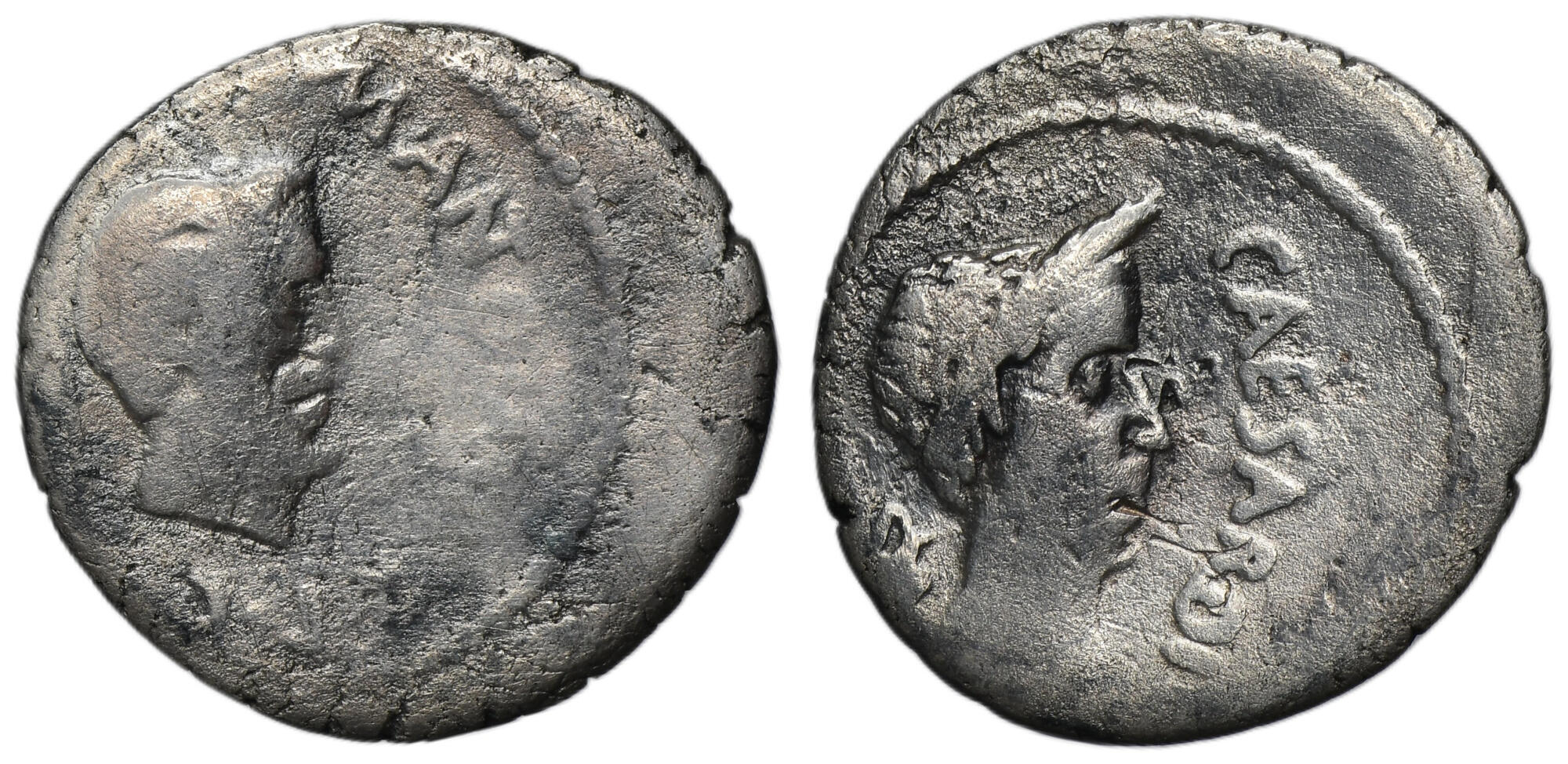 |
